Burnt caramel + vanilla custard, French Crème Brûlée effect
The French classic in gelato version. Burnt caramel for depth + cooked English custard (82-85°C) for structure. The dark amber caramel (almost black) is key: lighter caramels give only sugar flavor, here you need that bittersweet burnt note.
Caramel must become DARK amber, almost burnt but not black. If too light you'll only have sugar taste, you lose the characteristic Crème Brûlée flavor. When adding warm milk to caramel be very careful: it splatters violently. Keep arm away and use a tall saucepan.
Crème brûlée is one of the most contested desserts in the world. The first documented recipe appears in "Le Cuisinier Royal et Bourgeois" by François Massialot (1691), court pastry chef of Louis XIV. But the English claim a variant called "Trinity Cream" served at Trinity College Cambridge since 1879. And the Spanish have "Crema Catalana" dated 17th century.
Historical truth: all three traditions independently developed the same concept: egg cream + caramelized sugar on top. It's an invention born from cheap sugar availability in post-1500 Europe (colonial trade) + aristocratic egg pastry techniques.
Transforming crème brûlée into ice cream is an exercise in "essence": egg cream is the base flavor, the caramel "burn" becomes MIX-IN. The characteristic amber color of the caramelized crust translates into a dark caramel-colored vein running through the ice cream. Identical taste, ice cream format.
Crème Brûlée is one of the most beloved desserts in France. "Burnt cream" — the name says it all. A velvety yolk and vanilla cream, covered with a caramelized sugar crust that breaks under the spoon with that characteristic "crack". I tasted it for the first time in Paris many years ago, in a Marais bistro, and never forgot it.
The challenge in turning it into gelato is recreating those two elements — the cream and the caramelized crust — so they work together even frozen. It's not trivial.
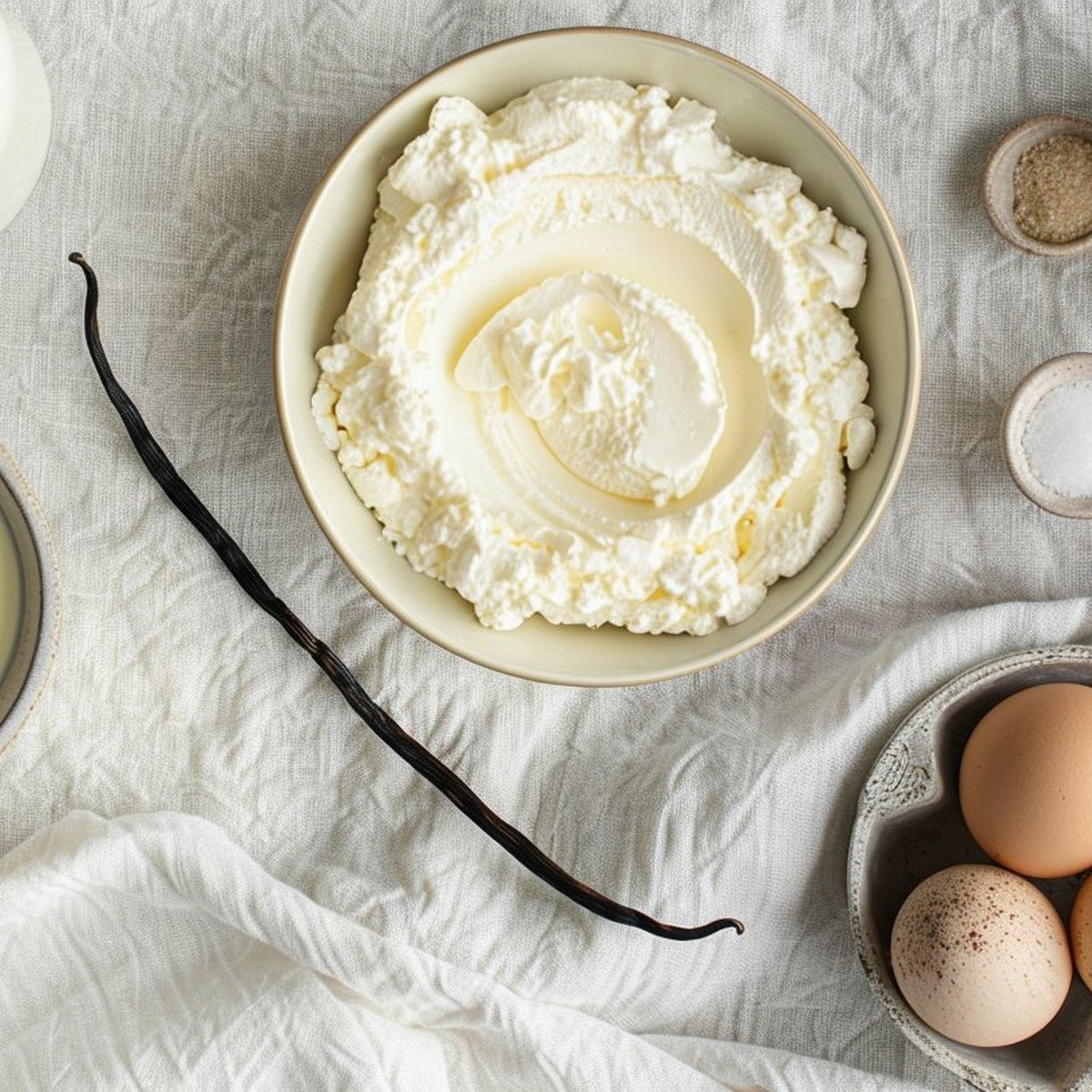
For the base cream we use egg yolks (2 per dose) and real vanilla (pod seeds, not synthetic flavoring). Yolks are the real "engine" of Crème Brûlée: they contain lecithin, a powerful natural emulsifier that binds fats and water, giving the base that silky, "Bavarian cream" consistency. Mascarpone added at end of cooking amplifies the creaminess and gives that rich milky flavor typical of tiramisu.
The caramel is the most technical part. We make it "dry" (sugar without water) until dark amber color, almost burnt. That "almost burnt" is important: it's the point where caramel develops toasted notes, of hazelnut, of whisky. Poured immediately into hot milk, the caramel dissolves and infuses the milk with flavor. When this caramelized milk becomes gelato, every spoonful brings that burnt caramel flavor into your mouth, the signature of Crème Brûlée.
The final touch is the sugar veil torched at serving — like the original French Crème Brûlée. That "crack" sound under the spoon, even with gelato, is worth all the recipe's effort.
"Catalana" version: add lemon zest + cinnamon to base. Caramel stays identical. It's the Spanish version, more aromatic than French.
"Trinity Cream" version: add vanilla seeds + orange zest to base. Caramel is darker (cooking up to 180°C). English version, more "British".
Chocolate version: add 30g melted 70% dark chocolate to base. Caramel on top stays. Sounds strange but works: chocolate + caramel is natural pairing.
Keto version: replace sugar with erythritol + 5g glycerin. "Caramel" made with erythritol + drop of glycerin cooked at 180°C — doesn't Maillardize identically but comes close. ~3g net carbs per serving.
In France crème brûlée is formal end-of-dinner dessert. For ice cream version, same elegance: • French sweet wine (Sauternes, Banyuls) — wine gold recalls caramel • Demi-sec champagne — acidity balances sweetness • Decaf coffee late-evening — doesn't overwhelm delicate vanilla flavor
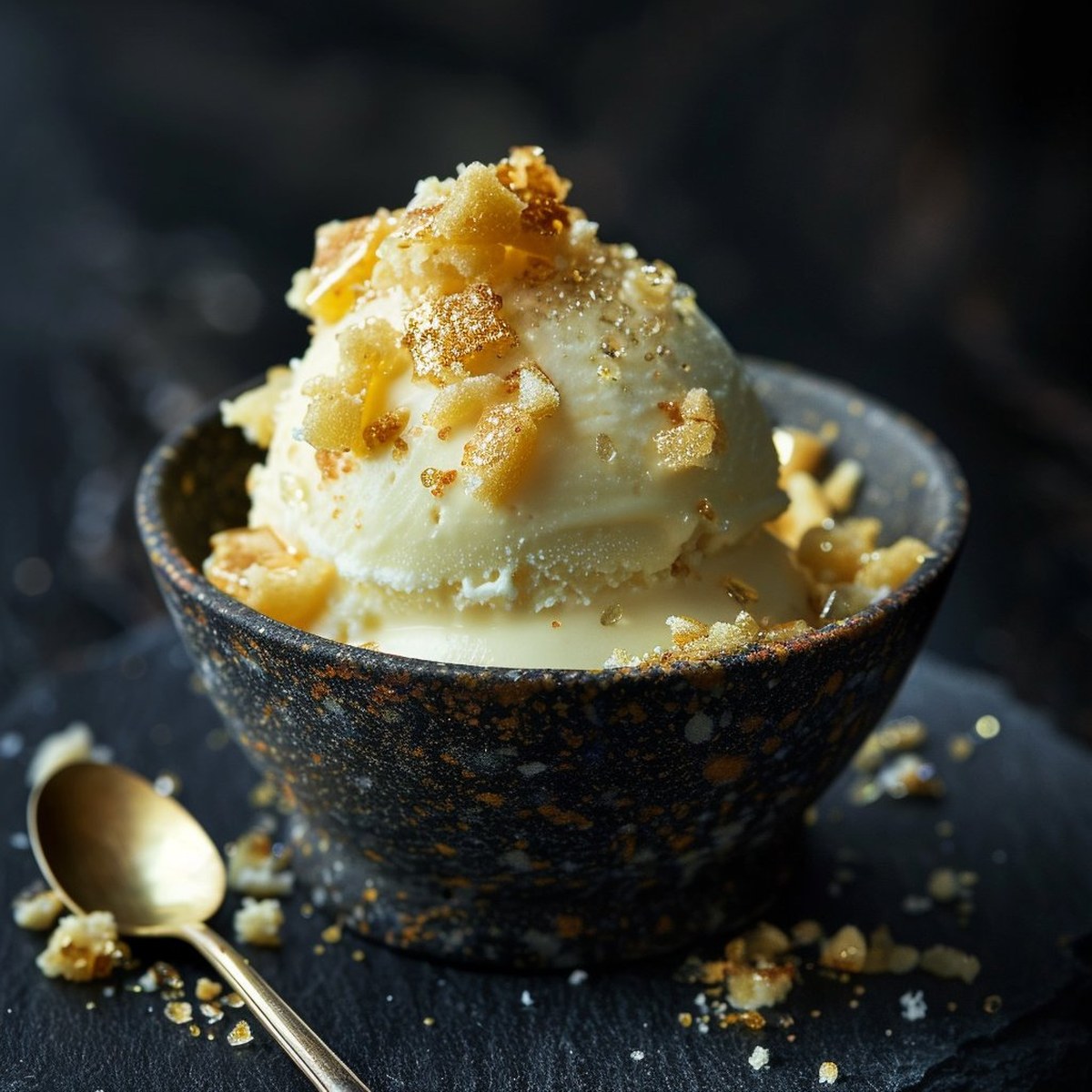
"Bistrot style" presentation: scoop (60g) in white porcelain ramekin. On top: hard caramel shards (cook sugar at 180°C, pour on parchment, cool 5 min, break). 1 coffee bean as decoration. French minimal elegance.
For after-dinner: after grilled steak with vegetables, brûlée ice cream + a coffee is classic French closure. Works with roast fish too.
"Caramel crystallized into very hard pieces": you cooked sugar at too-low temperature (under 165°C) or without water. For ice cream you need caramel cooked at exactly 175°C, with 10g water + 20g cream added at end of cooking. Probe thermometer mandatory.
"'Raw egg' taste": same logic as mimosa: pasteurize yolks at 82-85°C for 1 minute. Below, raw taste + Salmonella risk.
"Caramel melts in ice cream and loses structure": caramel was too "wet" (too much water or cream). Max limit: 30g liquid per 100g sugar. Above, caramel doesn't thicken enough.
"Bitter 'burnt' taste": you cooked sugar over 185°C. Caramel goes from "golden amber" (175°C) to "dark brown" (185°C+) and becomes bitter. Digital thermometer, always.
Crème brûlée ice cream keeps well thanks to high yolk + cream fats stabilizing structure. Useful life: 12-14 days at -18°C without flavor degradation.
Caramel as MIX-IN keeps decently: after 7-10 days may slightly "melt" into base and lose identity. For maximum freshness, prepare fresh caramel at MIX-IN time (takes 5 minutes).
Strategy: prepare base without caramel and freeze. When needed, process and add fresh caramel to MIX-IN. Always maximum quality.
Other recipes in the same category you might like
Join our Facebook group: the first international multilingual community dedicated to Tefal Dolci, Moulinex Dolci and Ninja Creami Deluxe. Every day, enthusiasts from Italy, France, Germany, Spain, Czech Republic, UK, USA and Australia post new recipes, solve technical problems, share their results. Technical livestreams with Stefano. Join now: the community is growing fast, become one of the pioneers.
Join the Group →