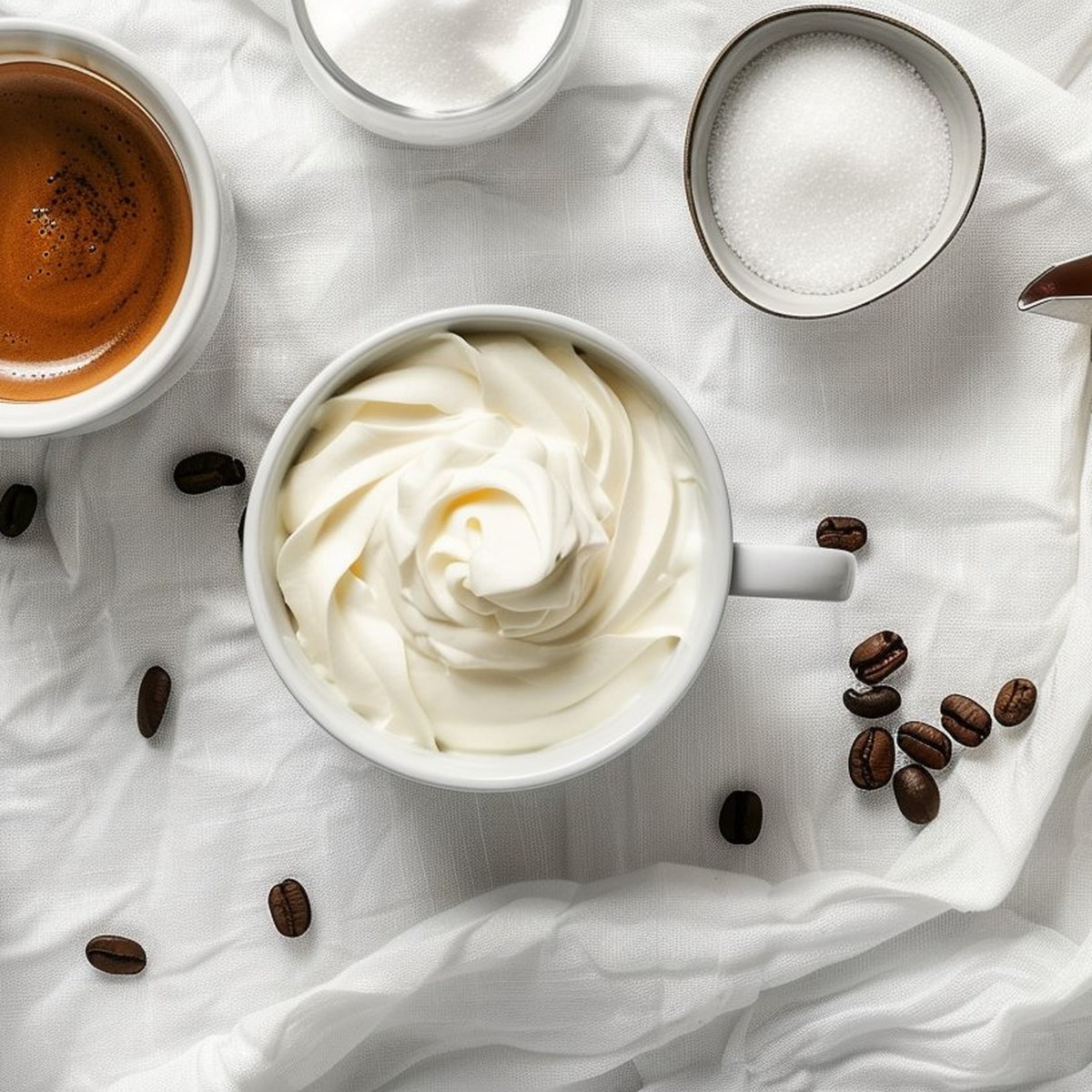
Creamy on first spin with coffee you already have at home
A creamy gelato on the first spin with coffee you already have at home. Simple, quick, delicious. Moka coffee is perfect: full extraction, aromatic oils at maximum. Mascarpone acts as natural emulsifier and increases creaminess without weighing down.
Variant without dextrose and guar: use 65 g total sugar and add one egg yolk. The yolk acts as natural emulsifier. Cooked method: heat milk, whisk yolk with sugar, pour warm milk while stirring, cook at 82°C, add cream and mascarpone, cool, add coffee.
Storage: 2-3 weeks in freezer. Before serving leftover portions do a quick RE-SPIN.
The Bialetti moka was born in 1933 in Crusinallo (Verbania). Alfonso Bialetti applied the washing machine principle (boiling water under pressure) to coffee: an invention that would change Italian culture. Today 90% of Italian homes have a moka.
Coffee extracted from moka is different from bar espresso: less crema, more body, more "rustic" and less acidic aromatic profile. It's home coffee, breakfast coffee, Italian after-lunch coffee.
In ice cream, moka coffee works better than espresso: moka's slow extraction (3-5 minutes) brings more sugars and amino acids, giving a richer and less harsh flavor. Medium-high roasting ("Tipo Bar" Lavazza, "Crema e Aroma" Hag, "Quality Red" Nespresso) is ideal for ice cream.
Moka coffee is a very Italian thing. When I see Americans making coffee with capsules, or French with filters, I always think: "you don't know what you're missing". Moka is different. It's not just the flavor — it's the ritual. Filling the tank, the filter with finely ground coffee, screwing the two halves together, low heat, and that characteristic gurgling when steam pressure pushes water upward.
For coffee gelato, moka is the right choice for two technical reasons. First: it extracts oils and natural emulsifiers from coffee (the "crema" under pressure), which help the gelato's creaminess. Espresso from a bar is even better for this, but requires a dedicated machine; home moka does a 90% comparable job.
Second: moka coffee has a much more concentrated water/coffee ratio than American filter coffee. A small cup (35-40 ml) has the same caffeine and aromatic compounds as a large cup of American coffee. For gelato this is perfect: we add little "free" water but lots of flavor.
Adding mascarpone is the second secret. Mascarpone is a very fatty (44%) and very creamy fresh cheese, typical of Lombardy (my region). In gelato shops it's used as a natural emulsifier for "super creamy" gelatos. In coffee gelato it balances the coffee's acidity and gives that velvety mouth feel typical of tiramisu.
A technical note: the coffee must be COMPLETELY cold before adding to other ingredients. If still warm, it will partially melt the cream and mascarpone fats, and you'll get a "broken" base that struggles to freeze well. Better to make the coffee the evening before and put it in the fridge — it'll be perfect in the morning.
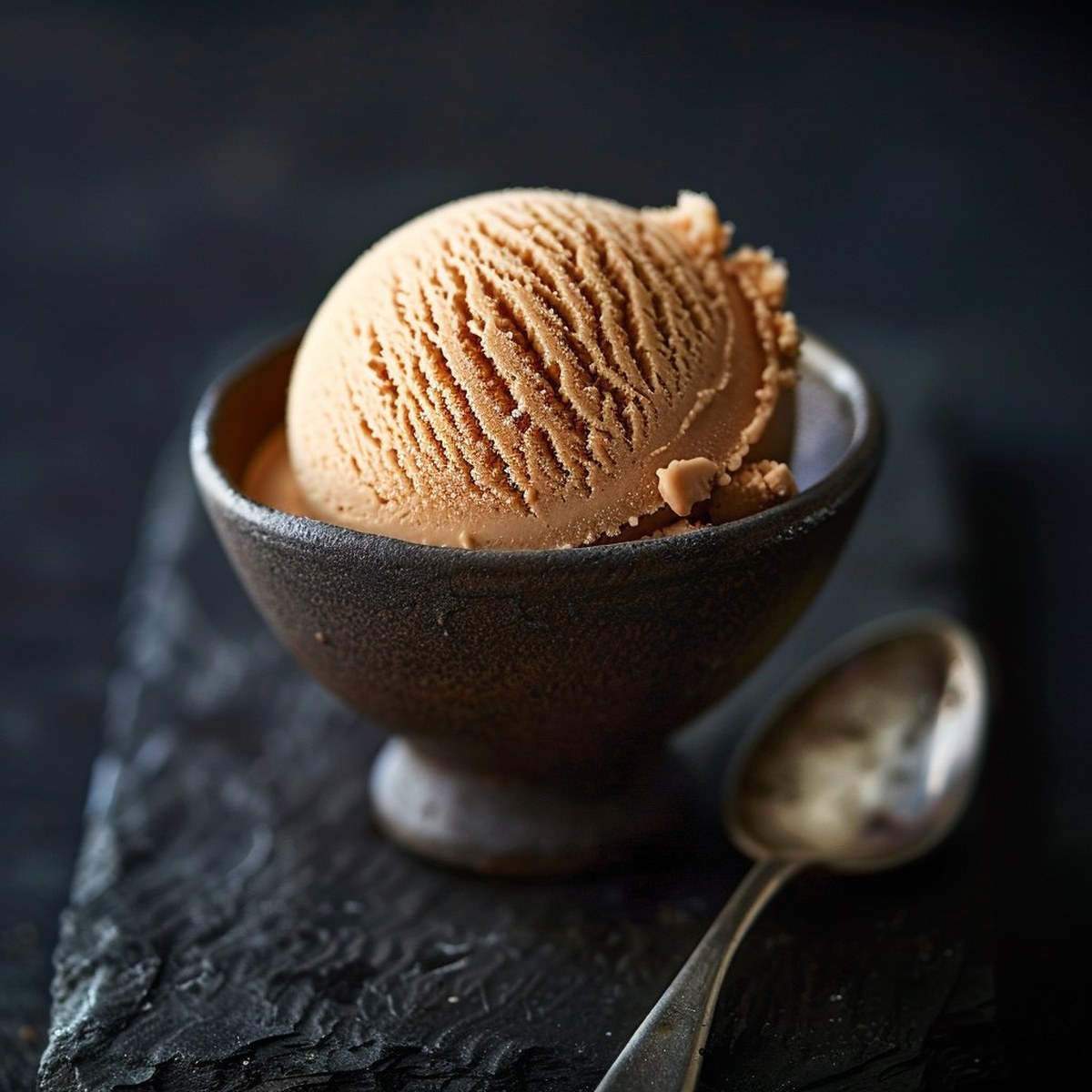
"Double Coffee" version: 90g concentrated moka coffee (3 small mokas). Very intense flavor, for true coffee lovers. Caffeine doubles (60-70mg per serving).
"Reverse Affogato" version: vanilla base ice cream, and pour hot moka coffee on top at serving time. Not MIX-IN but topping. Classic Italian affogato experience.
"Cappuccino" version: 50% moka coffee + 50% whipped milk foam. Whipped milk + sugar + cocoa powder on top. Creamy, sweet, "breakfast".
Decaf version: identical procedure but with decaffeinated moka coffee (Hag, Lavazza Decaffeinato). Identical taste, zero caffeine. Suitable for evening.
Moka coffee ice cream is the "pure Italian" dessert: after any Italian dinner, a scoop of moka coffee is the natural closure.
Classic pairings: • Tuscan cantucci — almond cookies are the historical pairing • Vin Santo del Chianti — sweetest sweet balances coffee bitterness • Sambuca con la mosca (1 coffee bean) — "old school" Italian closure
"Italian bar style" presentation: scoop (50g) in glass cup, 1 coffee bean on top, dust of bitter cocoa. Essential elegance.
For northern Italian after-dinner (Milan, Turin): moka coffee ice cream + 1 Bertolaso grappa. Nothing else needed. It's the perfect ending.
"Tastes burnt coffee": coffee was over-roasted (dark). Switch to medium-roast coffee. Standard Italian brands (Lavazza Qualità Rossa, Illy Classico) are perfect.
"Unpleasant acidic taste": under-roasted coffee (Scandinavian light-roast). For ice cream you need Italian medium-roast, not light-roast specialty coffee.
"Comes out grainy after spin": you're using freeze-dried coffee (Nescafé), not real moka coffee. Freeze-dried has more water and fewer solids. Solution: only concentrated cooled moka coffee.
"Coffee 'old' flavor": coffee prepared and cooled 24h+ before. Cooled coffee develops "stale" flavors within few hours. Prepare fresh on spin morning, cool quickly, process same day.
Moka coffee ice cream keeps decently: 7-10 days at -18°C. After, coffee aromas "flatten" (volatile terpenes degrade). It's not "gone bad", just less intense.
Strategy: prepare fresh, process within 36 hours of preparation. For those wanting very fresh coffee ice cream: prepare base in afternoon, freeze 24h, process next evening. Maximum intensity.
Decaf moka coffee keeps better than regular (aromatic degradation is slower in decaf): up to 14 days.
Other recipes in the same category you might like
Inspired by Jesús Escalera, ICED Method reformulation for scraping machines
Burnt caramel + vanilla custard, French Crème Brûlée effect
Same structure as the official Dolci manual, everything from the supermarket
Join our Facebook group: the first international multilingual community dedicated to Tefal Dolci, Moulinex Dolci and Ninja Creami Deluxe. Every day, enthusiasts from Italy, France, Germany, Spain, Czech Republic, UK, USA and Australia post new recipes, solve technical problems, share their results. Technical livestreams with Stefano. Join now: the community is growing fast, become one of the pioneers.
Join the Group →