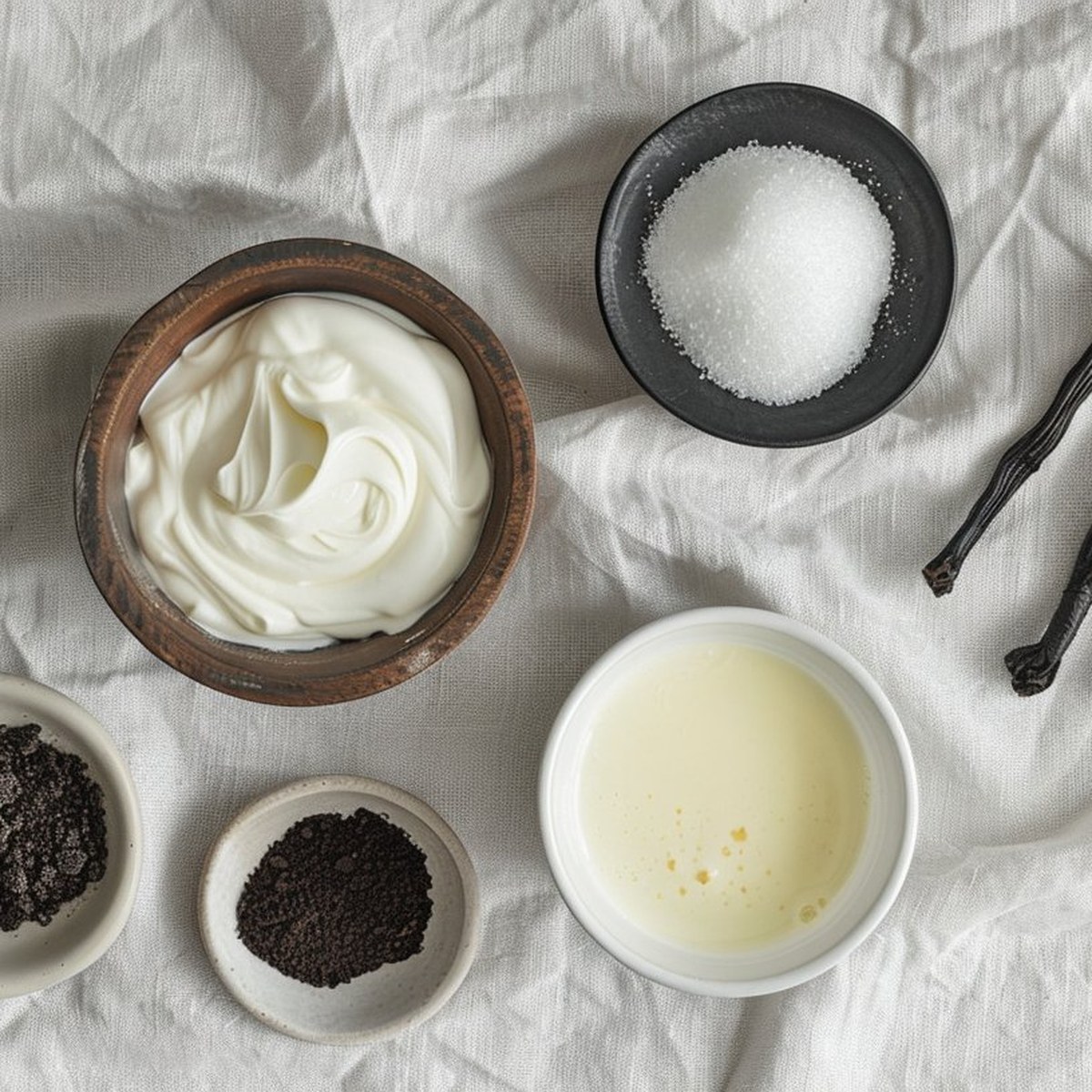
Intense flavor, dark color, enveloping creaminess
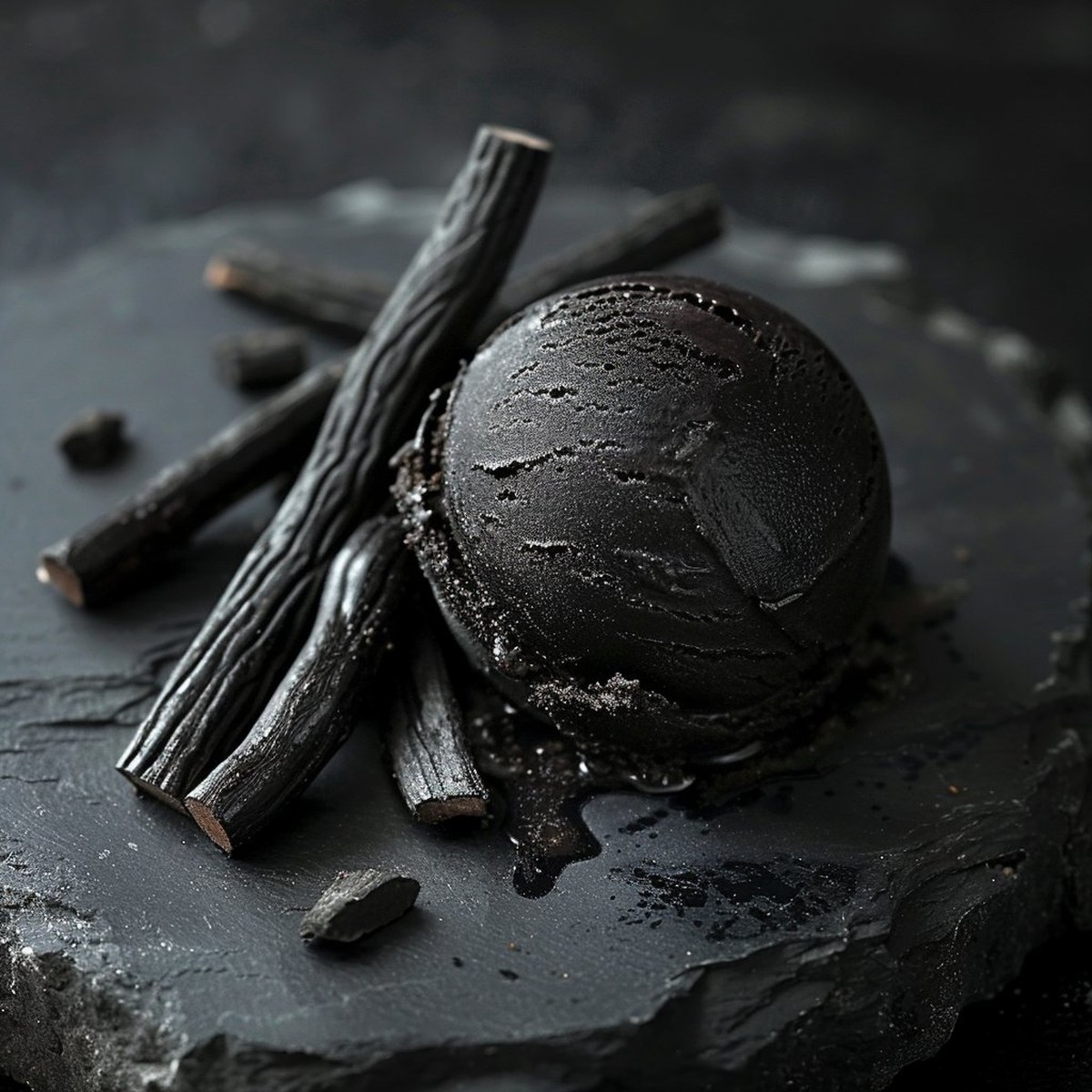
Calabria is the homeland of the world's best liquorice: the climate and soils of the Cosenza area produce a root (Glycyrrhiza glabra) rich in glycyrrhizin, the extract is naturally sweeter and less bitter than that from other regions. This gelato uses pure liquorice powder for intense flavor, dark color, enveloping creaminess. It's not a flavor for everyone — you either love liquorice or hate it. But if you love it, this gelato will blow your mind.
If you can't find pure powder: soft black liquorice wheels (35 g for 500ml / 50 g for 710ml, cut small and dissolved in warm milk); Haribo-style gummy liquorice (same dose as wheels, slightly sweeter taste); grated liquorice root sticks (10 g for 500ml, very concentrated); thick bar-style liquorice syrup (25 g for 500ml and reduce sugar to 35 g, because syrup is already sweet).
Tips: for milder flavor reduce liquorice to 10 g, for strong flavor increase to 20 g. Salt enhances liquorice immensely, never skip it.
Liquorice (Glycyrrhiza glabra) grows wild throughout the Mediterranean, but Calabrian liquorice is considered the best in the world. The plant is mentioned by Pliny the Elder (1st century AD) as a regional product. DOP brand "Liquirizia di Calabria" since 2011, covers 4 provinces (Cosenza, Catanzaro, Crotone, Reggio Calabria).
The chemical difference: Calabrian liquorice has 6.5-7% glycyrrhizin (the sweet active principle), while Turkish/Chinese reaches 4-5%. More glycyrrhizin = more flavor with less quantity. For ice cream this means: 8g of Calabrian liquorice is enough to give character to an entire pint, while commercial liquorice would need 12-15g.
The historic brand "Amarelli" (Rossano, Cosenza) has been active since 1731 — it's the oldest liquorice factory in the world. For this recipe we use pure Amarelli powder or extract.
Glycyrrhizin is 50 times sweeter than sugar, but with a completely different taste profile (sweet-bitter-anise). In ice cream it doesn't replace sugar (different PAC and POD), but drastically intensifies the perception of "intense and complex".
Technical curiosity: cold partially SUPPRESSES glycyrrhizin sweetness perception. So in ice cream (served at -10°C) liquorice seems less sweet and more bitter than at room temperature. Balance requires: slightly higher than average sugar (to compensate for sweetness suppression), and addition of an anise note (1 drop essential oil) that "rises" with cold balancing.
"Salt and Liquorice" version (Maldon salt): add 0.8g Maldon salt in pint. Salt strengthens sweet, contrasts liquorice bitter. Complex flavor, for connoisseurs.
"Liquorice + Pernod" version: 5g Pernod (high PAC). Pernod's anise amplifies liquorice anise notes. Adults, after dinner.
"Liquorice + Chocolate" version: 30g 70% dark chocolate as MIX-IN. Classic Nordic combination (Finnish Lakritsi). Contrasting flavors.
"Vegan Calabrian" version: almond milk + coconut cream instead of dairy. Perfectly plant-based. Liquorice is naturally vegan.
"No-sugar (keto)" version: replace sugar with erythritol + 6g glycerin. Glycyrrhizin has 0 carbs, is a pure aroma — perfect for keto. ~3g net carbs per serving.
In Calabria liquorice ice cream is served after dinner, with long American coffee or local digestifs (Calabrian, Bergamasco amaro). Optimal temperature is -10/-11°C (warmer than normal): too-cold liquorice loses aroma.
Recommended pairings: • 1 cube of Calabrian herb amaro (the classic regional digestif) • Neapolitan ristretto coffee (regional tradition) • Small piece of 80% dark chocolate at hand palm
"Calabrian trattoria" presentation: scoop (60g) in terracotta cup, decorated with small dry liquorice branch (Amarelli sells whole roots, decorative). 1 sprinkle of Maldon salt on top.
"Medicine/pharmacy" taste: you used low-quality liquorice (Chinese/Turkish). Pure Calabrian glycyrrhizin is sweet-aromatic, not "medicinal". Change provider — Amarelli online costs €30-40/kg, little is enough.
"Color is gray not black": industrial liquorice powder is often "cut" with anise and maltodextrin. Pure Calabrian (unprocessed) is dark brown that turns black with cold. Gray color = "diluted" liquorice.
"Flavor faded after spin": you added liquorice AFTER pasteurization. Wrong: it must cook with milk/cream base at 85°C for 1 minute to release aromas.
"Excessive bitter taste": too much liquorice. Limit is 8g per 480ml pint (Calabrian). Above, bitter dominates and sweet doesn't balance. Reduce, possibly add 1g extra salt.
Calabrian liquorice has natural preservative properties (glycyrrhizin has antimicrobial activity): useful life 14-18 days at -18°C. Flavor "stabilizes" 24-48 hours after first spin (aromas "amalgamate").
Strategy: prepare 2-3 pints simultaneously. Consume the first immediately; leave others in freezer 3-4 days and process when flavor has "relaxed". Perceptible difference: the first is more "edgy" bitter, the third is more "round" and deep. Same ingredient, different experience.
Other recipes in the same category you might like
Join our Facebook group: the first international multilingual community dedicated to Tefal Dolci, Moulinex Dolci and Ninja Creami Deluxe. Every day, enthusiasts from Italy, France, Germany, Spain, Czech Republic, UK, USA and Australia post new recipes, solve technical problems, share their results. Technical livestreams with Stefano. Join now: the community is growing fast, become one of the pioneers.
Join the Group →