Inspired by Jesús Escalera, ICED Method reformulation for scraping machines
Chef's version: professional recipe inspired by Jesús Escalera, Latin America's best pastry chef per World's 50 Best, trained at elBulli and The Fat Duck. His original "Helado de Ajonjolí Tostado" is for a professional batch freezer. We adapt it: our machines don't incorporate air, they freeze a block at -18°C and the blade scrapes it. All creaminess comes from composition: 25% fat that lubricates the blade, plus anti-freezing agents (glycerin + invert sugar) that keep the block soft.
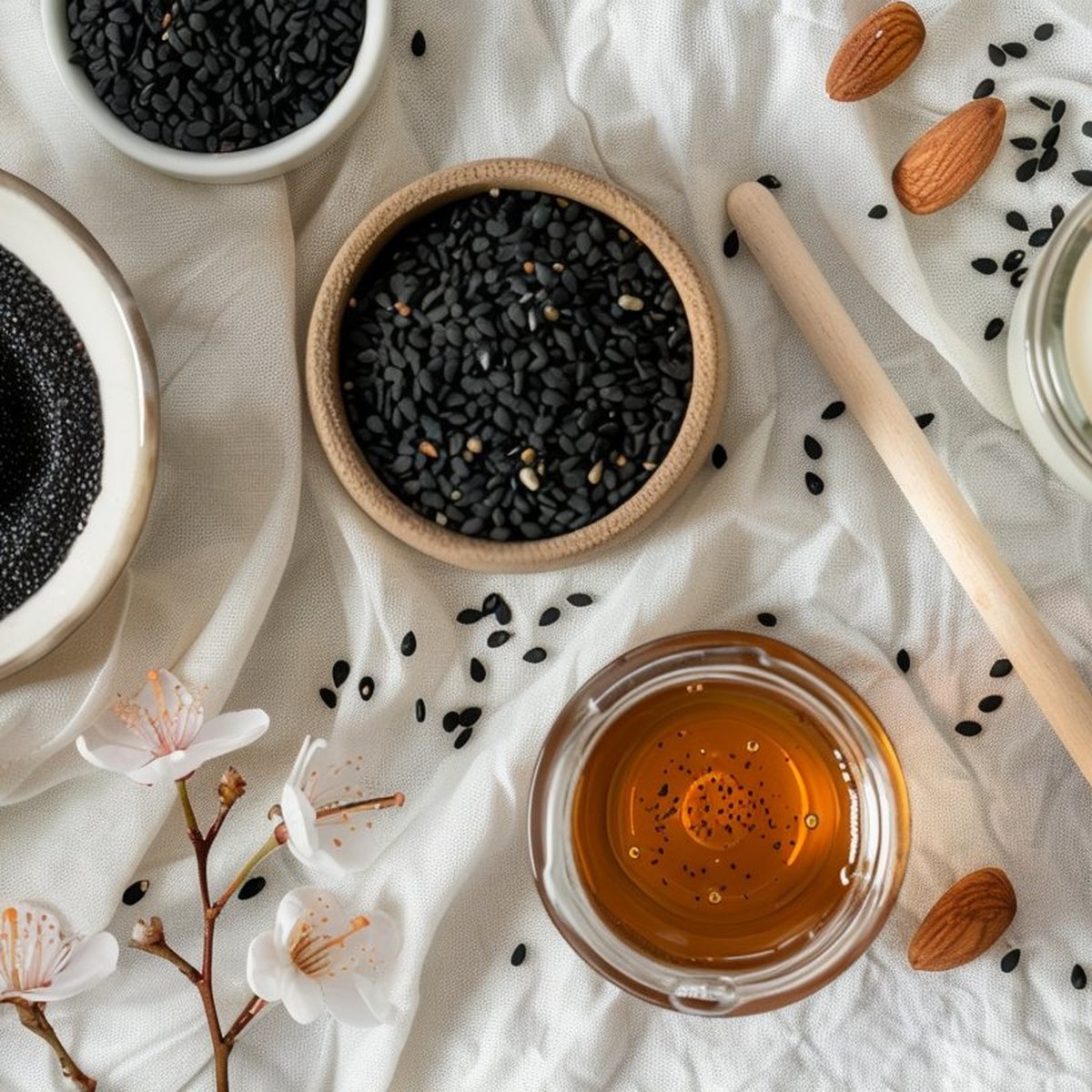
Japanese black sesame paste (kuro neri goma) is different from tahini: much more roasted, intense aroma. Brands: Mitake, Wadaman. If unavailable: 80 g black sesame seeds toasted in dry pan 5 min + blended with a drizzle of toasted sesame oil. Food-grade vegetable glycerin (pharmacy or pastry shops) is what makes the difference between soft gelato and a brick in the freezer.
Black sesame (kuro goma) has been in Japan for 2000 years. Buddhist monk Kūkai (774-835) used it in temples as "yang" food balancing the body. Today it's central to modern Japanese pastry — wagashi and Tokyo Michelin restaurant desserts.
In Europe it arrived in the last 10 years thanks to Japanese diaspora chefs (e.g. Ryuichi Mizukami in Paris, Yoji Tokuyoshi in Milan). Toasted black sesame flavor is "umami nutty": recalls toasted hazelnut + toasted soy + light coffee. Deep, complex, never banal.
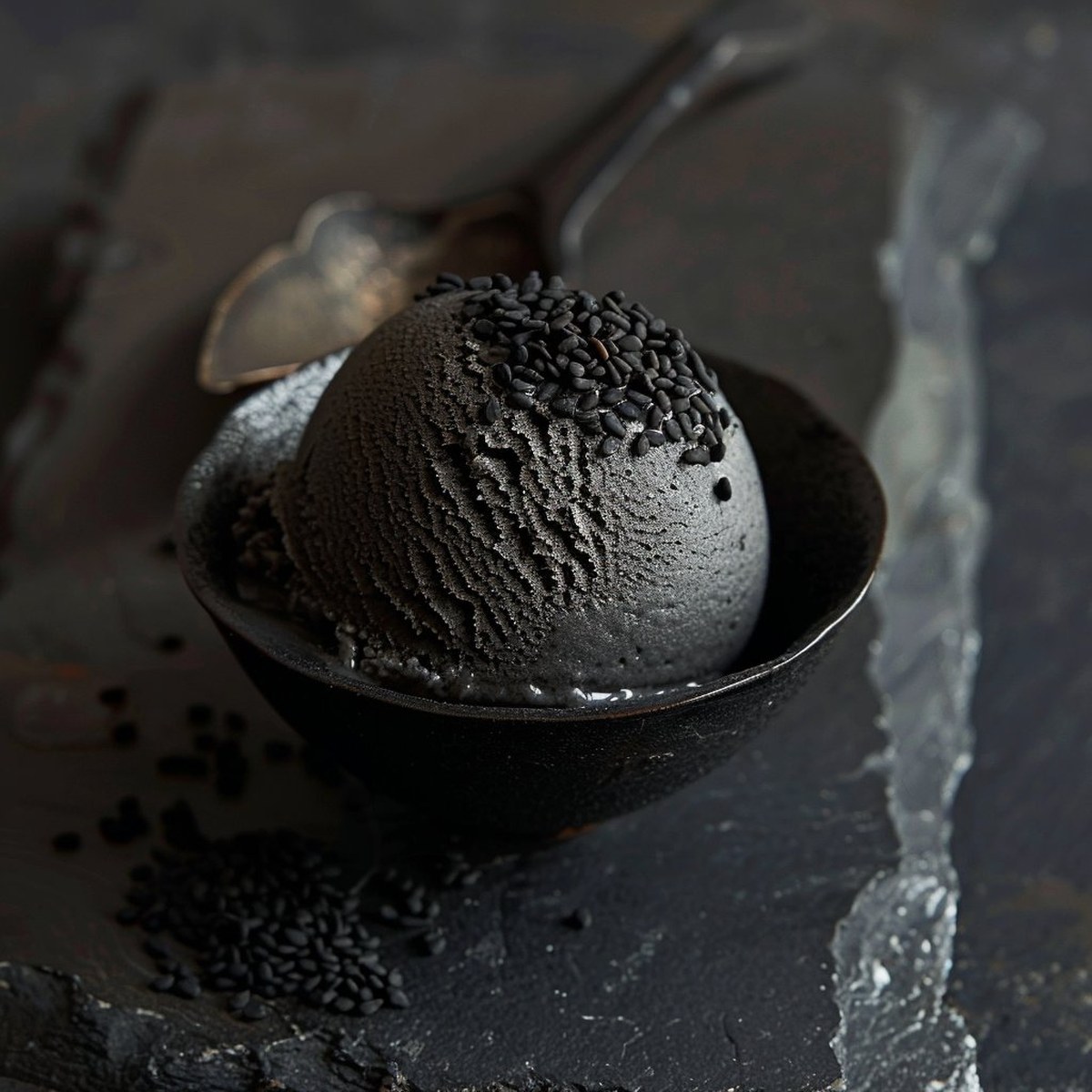
For ice cream, black sesame is a "wow" ingredient: intense anthracite gray color, unexpected flavor for European palate. In our pint, ground black sesame + black tahini (pure black sesame paste) + acacia honey for delicate sweetening.
Black sesame has 50% fat (polyunsaturated oils) + 18% protein + 12% fiber. Nutritionally exceptional: rich in selenium, magnesium, zinc, vitamin E. For ice cream: Fats: emulsify base, giving creaminess without extra cream. Proteins: bind water as natural stabilizer. Umami flavor: toasted compounds (pyrazines, furans) combine with milk fats creating complexity.
Crucial grinding: whole black sesame doesn't emulsify — seeds remain in pieces. Must be ground with mortar and pestle (for 10 min) or food processor (for 2 min) until homogeneous paste. Ready black tahini (Japanese Akami, American Roland) is perfect shortcut — 100% black sesame paste, nothing else.
Anthracite gray color is natural: no coloring. Black sesame skin contains anthocyanins giving the color. It's one of few ice cream recipes with such intense natural coloring.
"Black Sesame + Yuzu" version: add 8g yuzu juice (Japanese citrus) + 2g grated zest. Citrus balances sesame umami, gives "tokyo modern" flavor.
"Black Sesame + Matcha" version: add 5g matcha powder (ceremonial quality, not culinary). Color becomes intense gray-green, taste is bitter vegetal + nutty. "Mizukami-style" version.
"Black Sesame + Miso" version: add 8g white miso (shiro miso). Miso umami amplifies sesame's. Sounds strange but works — it's "wabi-sabi" Japanese ice cream.
Vegan version: replace cream with cashew cream (50g soaked cashews 4h + 100g water). Milk with almond beverage. Honey with maple syrup. Identical color and aromatic profile.
Black sesame ice cream is high-level Japanese restaurant dessert. Serve with: • Hot matcha green tea — matcha bitterness balances • Sake nigori (unfiltered sake, slightly sweet) — traditional Japanese pairing • Japanese whisky (Yamazaki, Hibiki) — pairing modernization
"Kaiseki style" presentation: small scoop (40g) in Japanese porcelain cup. On top: a few whole toasted black sesame seeds as decoration. 1 fresh green shiso (perilla) leaf alongside. Minimal Japanese elegance.
For Japanese dinner: after sushi/sashimi/tempura, black sesame ice cream is the perfect "tokyo modern" closure. Also for modern Italian-Japanese fusion dinners.
"Excessive 'bittery' flavor": you used raw or untoasted black sesame. For ice cream you need toasted (160°C for 10 min in oven) or ready black tahini. Raw has unpleasant "vegetal" flavors.
"'Sandy' texture": you didn't grind sesame finely enough. Big pieces (>0.5mm) feel like sand on palate. Grind at least 10 min with pestle, or use industrial black tahini.
"Color not intense, brown not gray": you used "dark" black sesame not real black. Commercial varieties vary: real Japanese black sesame has intense anthracite skin. Buy from Asian specialists (e.g. Akami, Yamato).
"'Old' flavor": sesame seeds oxidize quickly (oil is polyunsaturated). Buy sesame in small quantities, store in freezer. Use within 2 months of opening.
Black sesame ice cream keeps very well thanks to natural antioxidant fats of sesame (vitamin E, lignans). Useful life: 14-18 days at -18°C.
After first spin, cover with film and refreeze. Flavor may slightly "intensify" in first 3-4 days (umami flavor development). It's rare for an ice cream to improve over time, but sesame does.
For Kaiseki dinner: prepare 6 black sesame ice cream pints, store up to 2 weeks. Serve a small scoop (40g) for each guest at end of 7-course tasting menu. Sophisticated dessert that doesn't melt fast — sesame's dense matrix holds well at -10/-12°C.
Other recipes in the same category you might like
Creamy on first spin with coffee you already have at home
Same structure as the official Dolci manual, everything from the supermarket
Burnt caramel + vanilla custard, French Crème Brûlée effect
Join our Facebook group: the first international multilingual community dedicated to Tefal Dolci, Moulinex Dolci and Ninja Creami Deluxe. Every day, enthusiasts from Italy, France, Germany, Spain, Czech Republic, UK, USA and Australia post new recipes, solve technical problems, share their results. Technical livestreams with Stefano. Join now: the community is growing fast, become one of the pioneers.
Join the Group →