← All recipes
Gelato
N° 6
Big Stracciatella
Servings
4
Active time
10 min
Total time
24h
Machine
Tefal / Moulinex Dolci · Ninja Creami Deluxe
1961 is the official year of birth of stracciatella, in a small gelateria in Bergamo Città Alta called "La Marianna", at Via Gombito 17/A. Gelato maker Enrico Panattoni was looking for a different way to serve chocolate in gelato. He was inspired by "stracciatella alla romana" — the traditional soup where beaten eggs poured into boiling broth form irregular filaments, the "stracci".
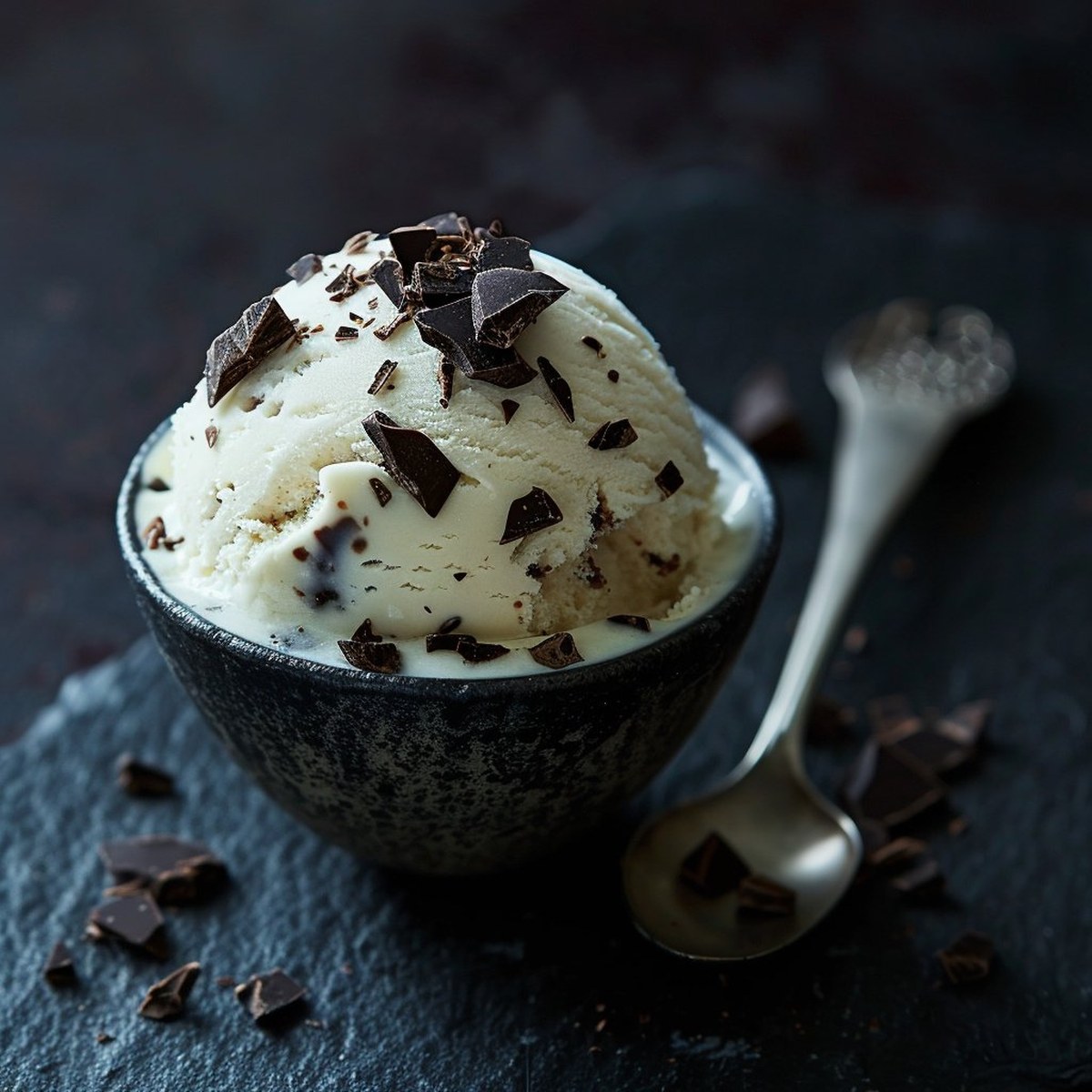
The intuition was to apply the same principle to gelato: pour melted dark chocolate over fior di latte during churning. The chocolate, on contact with the cold gelato, instantly solidifies into irregular dark shards.
From Bergamo, stracciatella spread throughout Italy, then the world. Today it's the most-copied Italian dessert worldwide: from industrial versions (Sammontana, Algida) to international gelateria interpretations. But the real, authentic stracciatella remains "La Marianna". If you pass through Bergamo, go up to Città Alta: it's worth it.
I was born and raised in Bergamo. For those who know my city, Bergamo is divided in two: Bergamo Bassa (Lower Bergamo), modern and industrious, and Bergamo Alta (Upper Bergamo), the medieval town perched on the hills, surrounded by the Venetian Walls (today UNESCO heritage).
Going up to Città Alta, in Via Gombito, you find the historic gelateria "La Marianna". It was there in 1961 that the gelato maker Enrico Panattoni invented stracciatella. He was inspired by "stracciatella alla romana" — a soup where beaten eggs poured into boiling broth form irregular filaments, the "stracci" (rags). Panattoni applied the same principle to gelato: melted chocolate poured over a fior di latte base during churning creates dark shards that solidify on contact with cold.
As a child, going to "La Marianna" was a ritual. Sunday afternoon, after walking under the city walls, stopping for a stracciatella was the perfect end to the day. Today when I go back home I still do it — and the taste is exactly that of sixty years ago.
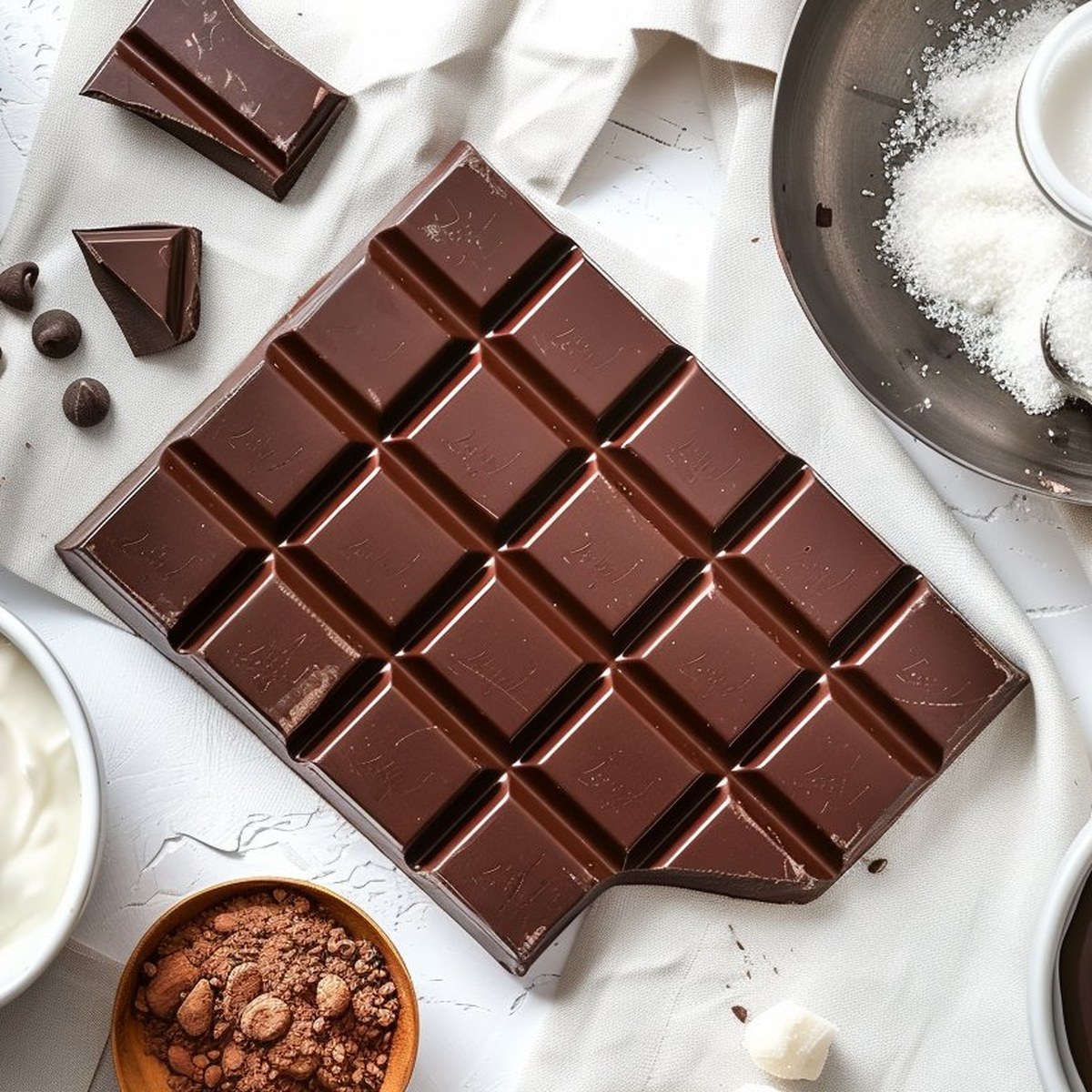
To make authentic stracciatella at home with Tefal/Moulinex Dolci or Ninja Creami Deluxe you need three things: a well-balanced fior di latte base (with a pinch of vanilla, like the original), quality dark chocolate (70%, not more bitter) and the right MIX-IN timing. The shards must be large enough to break under the spoon — not the powder of industrial gelatos.
Classic Bergamo version (La Marianna): the most faithful to the 1961 original. 70% dark chocolate in the shards, fior di latte base with vanilla. Nothing more. Authenticity is in simplicity.
"Sicily" version: fior di latte base + chocolate shards + 30g candied orange peel pieces. Some southern gelaterias offer it this way: the chocolate/orange contrast works wonderfully.
"Coffee Stracciatella" version: coffee base (3g instant coffee in the base) + 75% dark chocolate shards. Perfect after dinner.
"Reverse" version (chocolate base + vanilla shards): dark chocolate base, and the shards are dense vanilla cream (1 yolk + 30g cream + 5g sugar, heated to 80°C then cooled). Light shards on dark background: visual wow effect, identical taste but different perception.
Vegan version: base with almond milk + 100g vegan mascarpone (cashew-based) + vegan dark chocolate (check certification, some contain milk butter). Surprisingly faithful result.
Stracciatella is a "complete" gelato — it doesn't need elaborate accompaniments. Italian gelaterias often serve it with a crispy cone (cialda) and nothing else. Adding whipped cream or sweet sauces covers the vanilla and chocolate flavor.
Ideal serving temperature: -11/-12°C. Colder than this and the shards become too hard, losing the clean break under the spoon.
Minimal pairings: • Strong Italian espresso — the classic post-meal pairing • A dry butter cookie to "clean" the palate after • Fresh grated lemon zest on top (the minimalist version served in some Milanese restaurants)
For the perfect end-of-meal dessert: one scoop (50g) with ristretto espresso. No frills. That's how I ate it in Bergamo as a kid, that's how I still eat it today.
"The chocolate clumped into a block instead of forming shards": you poured too much chocolate too fast, or the chocolate was too cold (below 35°C). The secret is to pour in a thin stream from above, into the hole made in the center of the gelato. Chocolate at 38-40°C is the ideal temperature — hotter melts the surrounding gelato, colder doesn't flow well.
"Chocolate pieces are too large and block the blade": the chocolate solidified in "cold" zones before MIX-IN. Solution: before processing, slightly warm the pint with your hands for 30 seconds, then pour the chocolate and immediately start MIX-IN.
"Bitter chocolate flavor that overwhelms the fior di latte": you used 85%+ chocolate. For authentic stracciatella, 70% chocolate is the right balance. 85% is too bitter against the sweetness of the vanilla base.
"The shards melt into the base and lose crunch": you waited too long between MIX-IN and consumption. Stracciatella is at its best within 30 minutes of preparation. If you make it today for tomorrow, the shards "relax" slightly in the gelato matrix — still good, but not at peak texture.
"Vanilla doesn't come through": too little or low quality. Use real vanilla extract (not synthetic flavoring) or seeds from half a pod. Vanilla is the soul of authentic Bergamo fior di latte.
Stracciatella has a "shorter" shelf life compared to other gelatos. The chocolate shards lose crunch after 2-3 days in the freezer: instead of breaking cleanly under the spoon, they tend to bend.
The reason is simple: dark chocolate, in prolonged contact with the moist gelato base, gradually absorbs moisture and changes consistency. After 7-10 days the shards become "rubbery" instead of "snap".
Optimal strategy: prepare the fior di latte base and freeze it (the pure base lasts 14 days). Add the chocolate only when serving, one portion at a time. For those who eat stracciatella weekly, doing MIX-IN on the spot takes 1 extra minute but always guarantees the crunch quality.
If leftovers after the spin: refreeze but know that within 3 days you should consume it. After 5-7 days it's still good, but it's no longer authentic stracciatella — it's a fior di latte gelato with chocolate inside.
Other recipes in the same category you might like
Join our Facebook group: the first international multilingual community dedicated to Tefal Dolci, Moulinex Dolci and Ninja Creami Deluxe. Every day, enthusiasts from Italy, France, Germany, Spain, Czech Republic, UK, USA and Australia post new recipes, solve technical problems, share their results. Technical livestreams with Stefano. Join now: the community is growing fast, become one of the pioneers.
Join the Group →