Intense cocoa, fresh natural orange aroma, no iciness
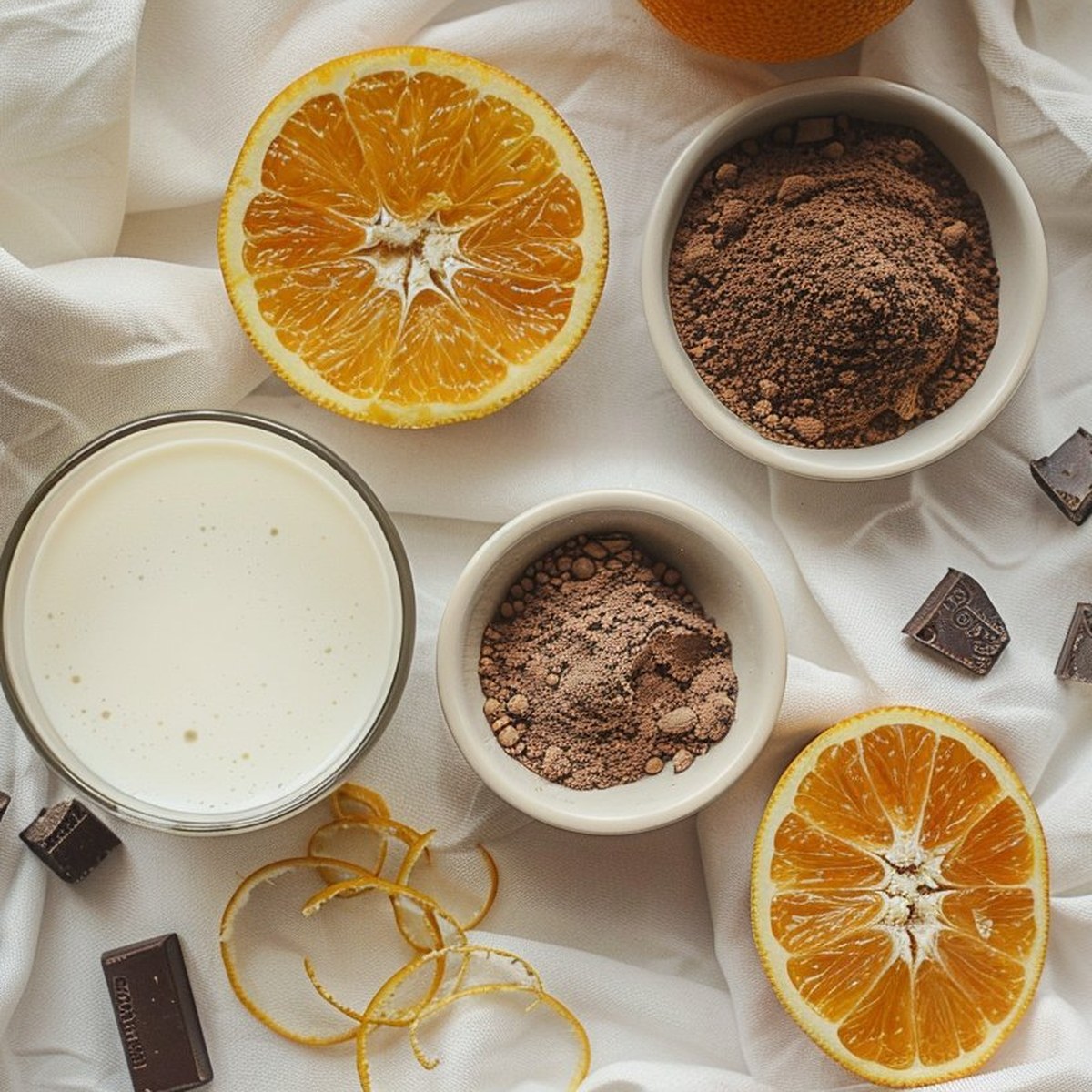
Cocoa and orange work beautifully together: cocoa is full and round, orange adds that fresh aroma that fits perfectly. The pairing is classic (French pastry has used it for centuries) but in gelato form it's still underexplored. Xanthan 0.6 g here replaces yolks: keeps everything bound and velvety without cooking eggs. Important: xanthan must always be mixed with powders before going into liquids, otherwise it forms lumps that won't dissolve.
About orange peel: use untreated (organic) oranges. The outer yellow part grated, never the white part (albedo) which is bitter. 5-minute infusion is enough — if you leave it too long it gets bitter.
About xanthan: 0.6 g is the right dose. Above 0.3% of total (~1 g here) it starts being perceptible as gummy. Jewelry scales (0.01 g) are essential.
About orange juice: add only to cold base. Citrus acid would curdle milk if added hot.
The cocoa + orange pairing is one of the oldest in European pastry. Its roots are in Sicily, in Modica, in the 16th-17th centuries. The Baroque town in Val di Noto was under Spanish rule, and the Spanish brought cocoa beans from Mexico — Aztec cocoa. In Modica the cocoa was processed "cold" as the Aztecs did — no added cocoa butter, no conching. And it was flavored with orange zest or cinnamon.
Modica chocolate still exists today (PGI since 2018), all grainy on the palate because the sugar doesn't fully dissolve — it's the only European chocolate made like the pre-colonial one. The orange version is one of the most beloved. Sold in Modica's pastry shops and all of Sicily.
From there the pairing spread throughout Europe. Turin adopted it in the 1700s with its court chocolatiers. Lindt picked it up in the 1900s with Excellence Orange bars. Domori in Turin, Amedei in Tuscany, today all Italian artisan pastry shops make orange dark chocolate.
Our gelato version captures this historic pairing: intense unsweetened cocoa + untreated orange zest + a drop of juice for fragrance. It's Sicily in a cup — the flavor of an island that has been the bridge between the Arab, Spanish and Italian world since prehistoric times.
There's a chemical reason why orange enhances cocoa. Orange peels contain d-limonene, an aromatic essential oil with volatile molecules similar to those of roasted cocoa (pyrazines, responsible for the "toasted" cocoa flavor). Result: orange doesn't mask cocoa — it amplifies it.
For gelato the process matters. The orange peel must be infused in hot milk for 5 minutes — heat extracts the essential oils, which are fat-soluble (they dissolve in milk and cream fats, not water). Without hot infusion, the orange flavor would stay on the surface without penetrating. The juice, added raw at the end, gives the fresh tangy note that balances sweetness.
Unsweetened cocoa is preferable to dark chocolate for this gelato. Dark chocolate contains cocoa butter (50%) which hardens the gelato like stone at -18°C. Unsweetened cocoa powder (Valrhona, Domori, Amedei or even Perugina) is pure cocoa flavor without solid fats, and the gelato stays soft at the right temperature.
Dextrose and xanthan gum are the two technical secrets. Dextrose (PAC 190) prevents hard freezing. Xanthan (0.6g, scant half teaspoon) binds water and gives creaminess. For Tefal/Moulinex Dolci and Ninja Creami Deluxe this combination always spins on the first try, even with a relatively lean base (8% fat). The natural orange note does the rest.
"Sicily" version: use Sicilian DOP red oranges (Tarocco, Moro). Base color becomes slightly reddish, taste more intense and Mediterranean.
"Alcohol-free" version: replace orange liqueur with 5g natural orange extract (Nielsen-Massey, bourbon vanilla). No alcohol, even purer taste.
"Double cocoa" version: add 10g of 70% dark chocolate chips as final MIX-IN. Chocolate "crunch" breaks base creaminess.
"Cremino chocolate-orange" version: alternate in the pint layers of cocoa-orange base with hazelnut cream (1 tablespoon every 2 cm). Result: layered gelato classic cremino style.
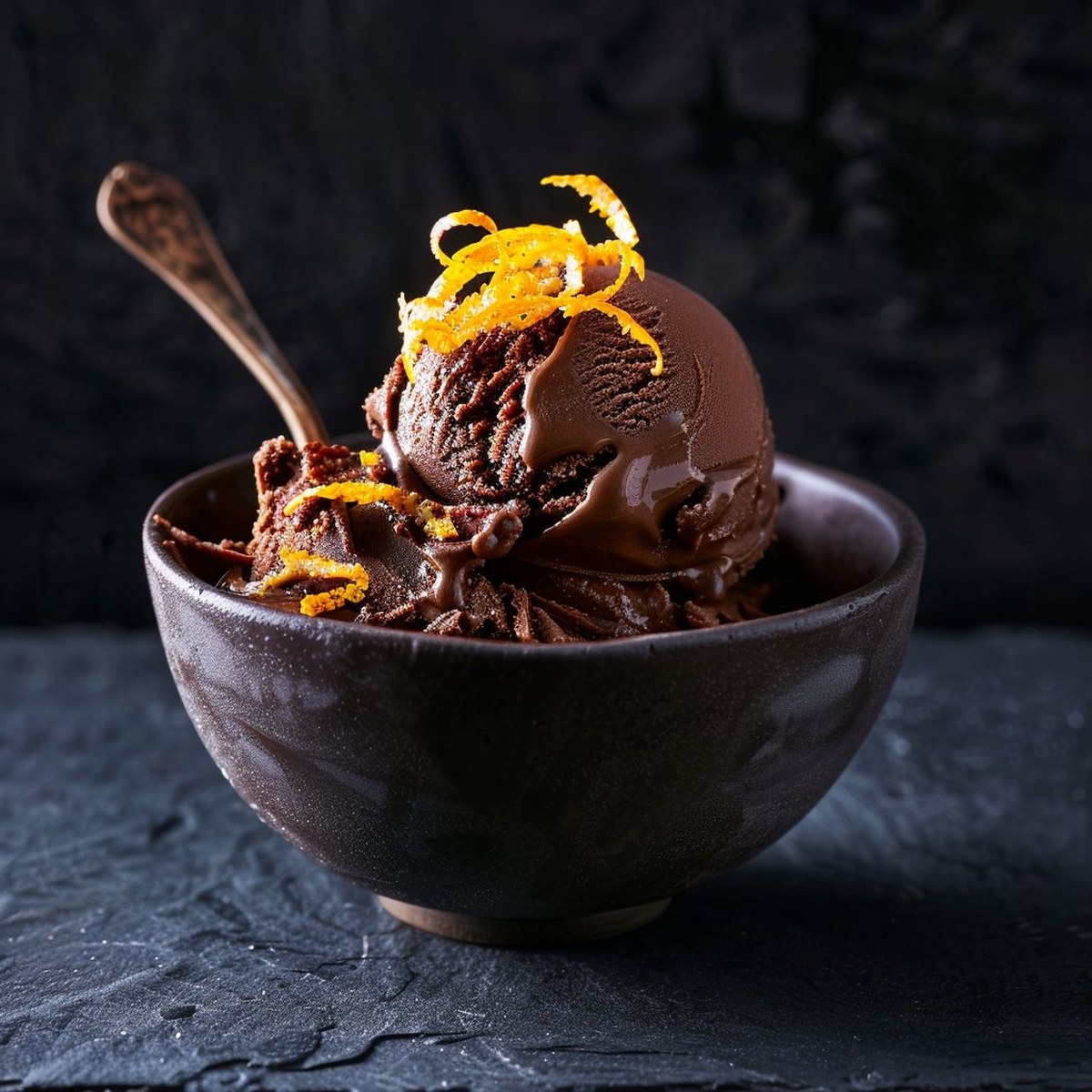
Ideal temperature: -10/-12°C. Decorate with candied orange peel strips (fine strips) and a fresh grated zest of organic orange on top.
Refined pairings: • Cognac VS or aged brandy (1 cl alongside) • Strong espresso (coffee bitterness elevates cocoa) • Tuscan almond cantucci — classic "vinsanto" replaced by gelato
For post-fish-dinner dessert: after a light meal, cocoa-orange closes elegantly without weighing down.
"Cocoa flavor too bitter": you're using 100% sugar-free cocoa (e.g. Domori "Apurimac" cocoa). Increase sugar by 10-15g, or choose a "processed" cocoa (Dutch, alkalized) which is less aggressive.
"Orange barely tastes": zest wasn't organic or isn't fresh enough. You need at least 3-4g of fresh finely grated zest (no white pith, bitter) per 480ml of base. Dried/candied lemon zest doesn't work — not enough essential oil.
"Metallic" or "soapy" taste: cocoa touches orange juice directly in liquid phase. Orange acid + cocoa pH create a reduced Maillard reaction producing unpleasant notes. Solution: add juice after pasteurizing the base (at 50°C, not 85°C).
"Comes out grainy after spin": too much orange juice (free water). Reduce juice to 20g maximum, or increase cream by 30g to compensate.
Cocoa-orange keeps well 8-10 days at -18°C. Orange zest tends to lose aroma after 5-6 days, but overall flavor remains good. For "fresh" aroma, add a drizzle of grated zest at serving time (not in preparation phase).
Trick: prepare base without zest, freeze in pint. Add fresh grated zest only at final MIX-IN at serving time. Always vibrant flavor.
Other recipes in the same category you might like
Join our Facebook group: the first international multilingual community dedicated to Tefal Dolci, Moulinex Dolci and Ninja Creami Deluxe. Every day, enthusiasts from Italy, France, Germany, Spain, Czech Republic, UK, USA and Australia post new recipes, solve technical problems, share their results. Technical livestreams with Stefano. Join now: the community is growing fast, become one of the pioneers.
Join the Group →