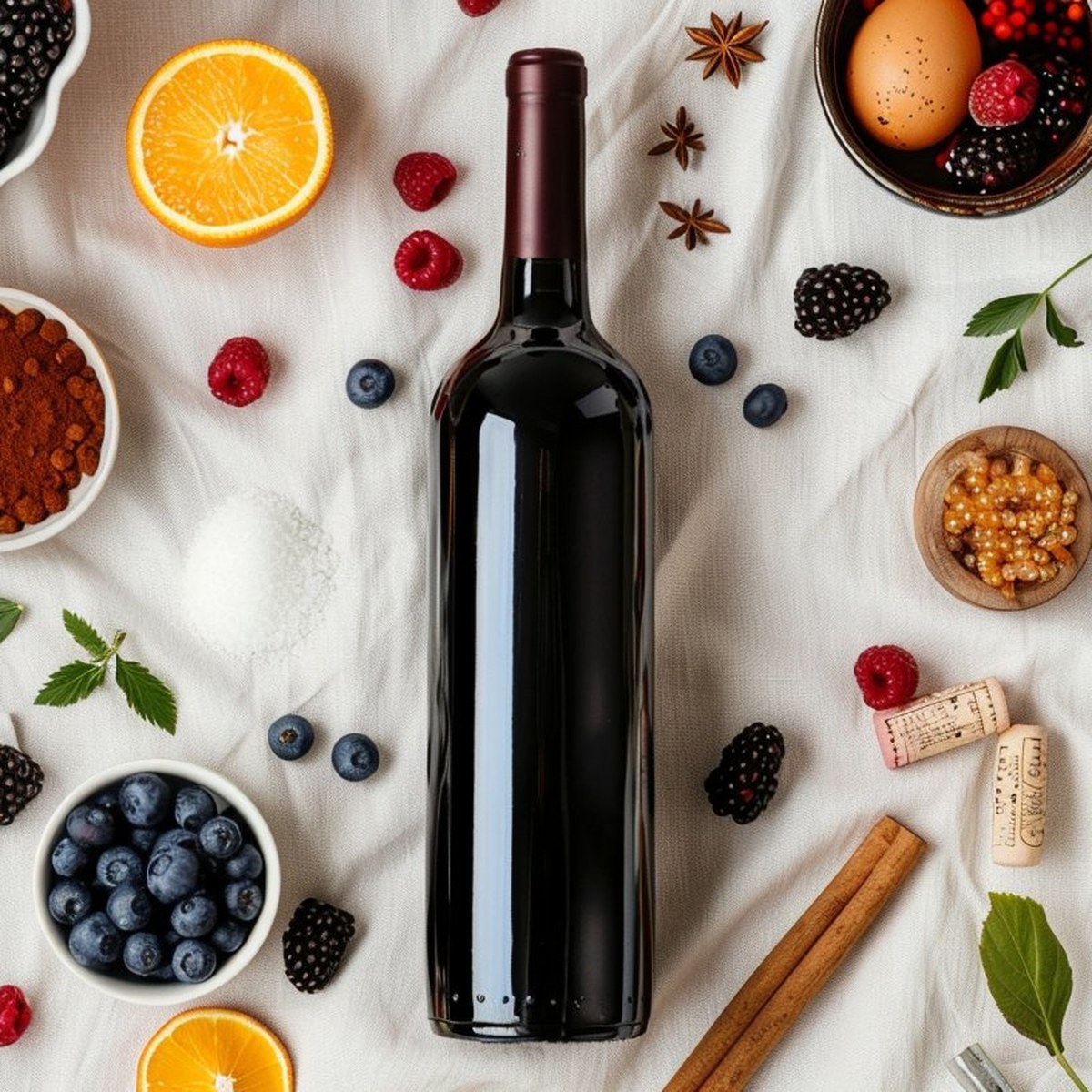
Intense burgundy color, wine and forest flavor — a Tuscan osteria dessert
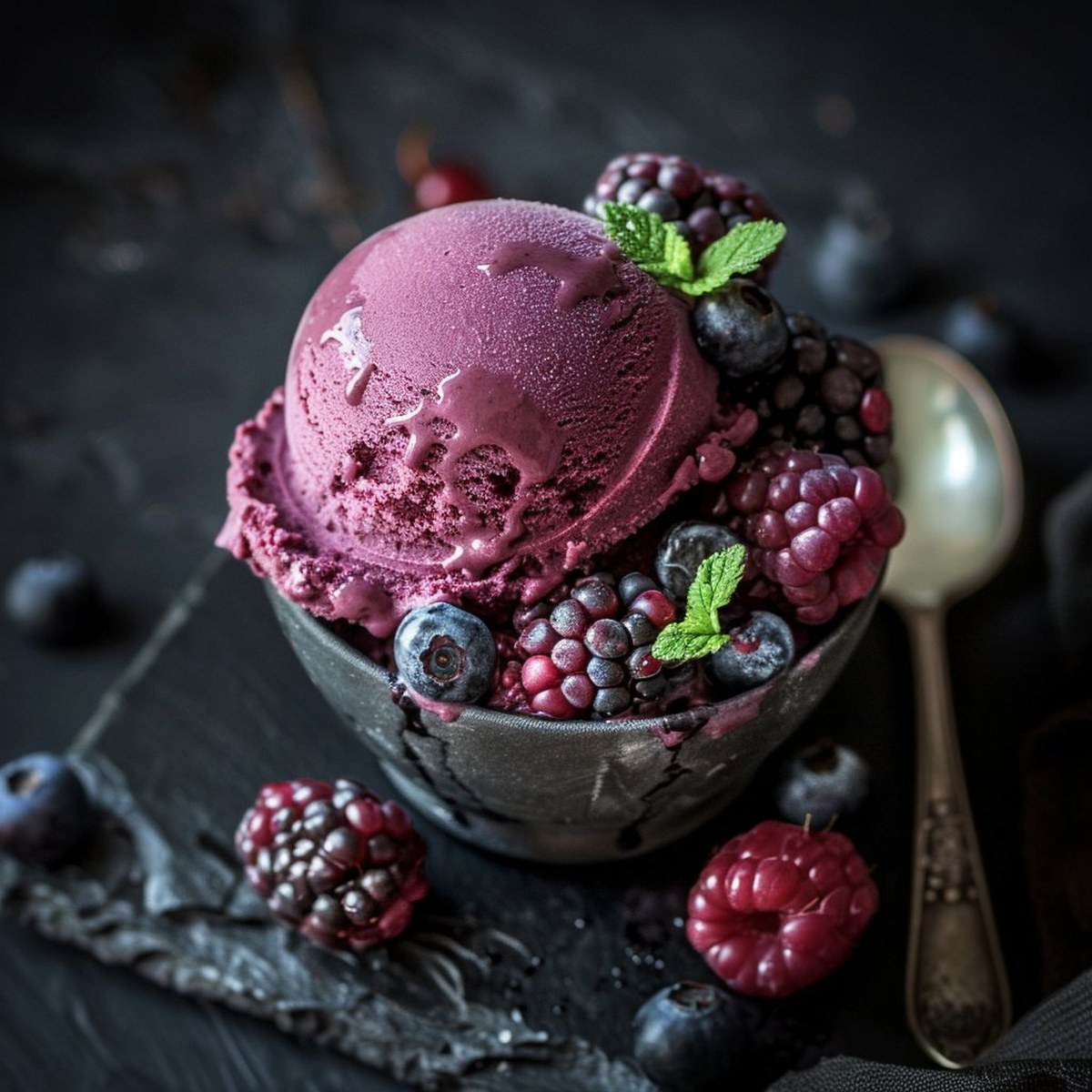
An elegant gelato with intense burgundy color and the flavor of red wine and wild berries. Chianti DOCG (Sangiovese blend) with its natural acidity and well-structured tannins is perfect for reductions: reduced by half it concentrates the aromas without ethyl alcohol (which evaporates at 78°C). Cinnamon and orange peel bind the wine with the forest fruits. A long preparation but the result is a high-end pastry gelato.
About alcohol: after reduction residual alcohol content is ~3% (below the critical 12% threshold beyond which gelato doesn't freeze). However not suitable for children, pregnant women, abstainers.
About yolks: cooking at 82°C fully pasteurizes. If they scramble you exceeded 85°C: strain immediately and continue. Above 90°C scrambled eggs.
About Chianti: use real DOCG Chianti, not cooking wine. Cooking wine is often salted (to avoid beverage wine tax) and would ruin the gelato. A young Chianti works fine, no need for Riserva.
In Tuscany wine is not just for drinking. People cook with wine, make desserts with wine, even bake cookies with wine (the "biscotti al vino" of Florentine grandmothers). Chianti in particular has an ancient tradition in Tuscan tavern kitchens: in sauces, in meat reductions, in Christmas desserts.
Chianti DOCG comes from the hills between Florence and Siena. It's made mainly from Sangiovese grapes (at least 70%), which give the wine that ruby red color and that dry, slightly fruity flavor of ripe cherry, violet, plum. There are different Chiantis — Classico, Riserva, Gran Selezione — but for cooking a good simple Chianti DOCG is enough. Too expensive wines waste their delicate aromas in cooking.
The idea of turning wine into gelato is modern, but inspired by ancient traditions. In Sicily there's "sorbet al Marsala". In Veneto "sorbet al prosecco". Our Chianti gelato brings to the table the same idea — the character of a traditional Italian wine, but in dessert form.
The pairing with mixed berries is no coincidence: raspberries, blueberries, blackberries, blackcurrants are the flavors you taste at the finish of a good aged Chianti. It's like drinking the wine and eating it at the same time. A dessert that tells an entire region.
Putting wine directly in the gelato base is a common mistake. Fresh wine contains 12-13% alcohol, which — as we've seen in other recipes — drastically lowers the freezing point. Even just 30g of Chianti in a 480g base would be enough to make the gelato too soft, almost liquid. And then the "raw" wine flavor is acidic, tannic, doesn't pair with milk and yolks.
The solution is reduction: cook the wine over low heat to evaporate almost all the alcohol and concentrate the flavors. From 120ml of Chianti you get about 50g of reduction, which has the flavor of concentrated wine without the harshness of alcohol. The cinnamon stick and orange peel cooked together add spicy notes characteristic of Tuscan vin brulé.
The mixed berry coulis is the reduced French sauce. Cooking berries with a little sugar for 8-10 minutes breaks the cellular structure, releases aromas and concentrates flavor. Filtering seeds is important: seeds in gelato freeze into hard crystals like little stones (raspberry especially).
The cooked base method with yolks (pasteurization at 82°C) is not just for food safety — pasteurized yolks develop natural emulsifiers (lecithin) that bind cream fat with wine water, giving creamy structure even with an acidic addition like Chianti.
The final color — deep burgundy, almost violet — is the color of Tuscany in autumn. When the vineyards turn red and the berries are still on hedgerow brambles. A dessert that has its own seasonal scent.
"Sagrantino di Montefalco": more structured Umbrian wine, richer tannins. More "winey" flavor, for connoisseur palates.
"Brunello di Montalcino": Tuscany's noblest wine. High cost, but resulting ice cream is starred level.
"Cabernet Sauvignon": French or Italian cabernet. Higher tannins, more "fruity" flavor compared to Sangiovese.
"Alcohol-free version": replace wine with black grape juice (concord) + 5g dealcoholized wine extract. No alcohol, less complex flavor but suitable for everyone.
Temperature: -10/-12°C. Decorate with fresh mixed forest berries and a sage leaf (no mint, would dominate).
Pairings: • The same Chianti used in recipe (a glass alongside) — direct pairing • 80%+ dark chocolate flakes on top • Almond shortbread cantucci
For dessert after Tuscan dinner (steak, ribollita), Chianti ice cream closes consistently with regional cuisine.
"Too present "alcoholic" wine flavor": you used too much wine. Max limit: 10g per 480ml base. Above, alcohol dominates.
"Astringent ice cream, "dries" mouth": tannins are too many. You used young wine (recent vintage). Use a Chianti at least 2-3 years from harvest, tannins have softened.
"Comes out liquid in pint": PAC too high (wine + acidic red fruits). Reduce wine by 2g.
Chianti ice cream keeps optimally: 14-16 days at -18°C thanks to alcohol that inhibits microbiology. Wine flavor "matures" slightly in first 3-4 days, reaching peak. After 12 days starts fading.
Other recipes in the same category you might like
Join our Facebook group: the first international multilingual community dedicated to Tefal Dolci, Moulinex Dolci and Ninja Creami Deluxe. Every day, enthusiasts from Italy, France, Germany, Spain, Czech Republic, UK, USA and Australia post new recipes, solve technical problems, share their results. Technical livestreams with Stefano. Join now: the community is growing fast, become one of the pioneers.
Join the Group →