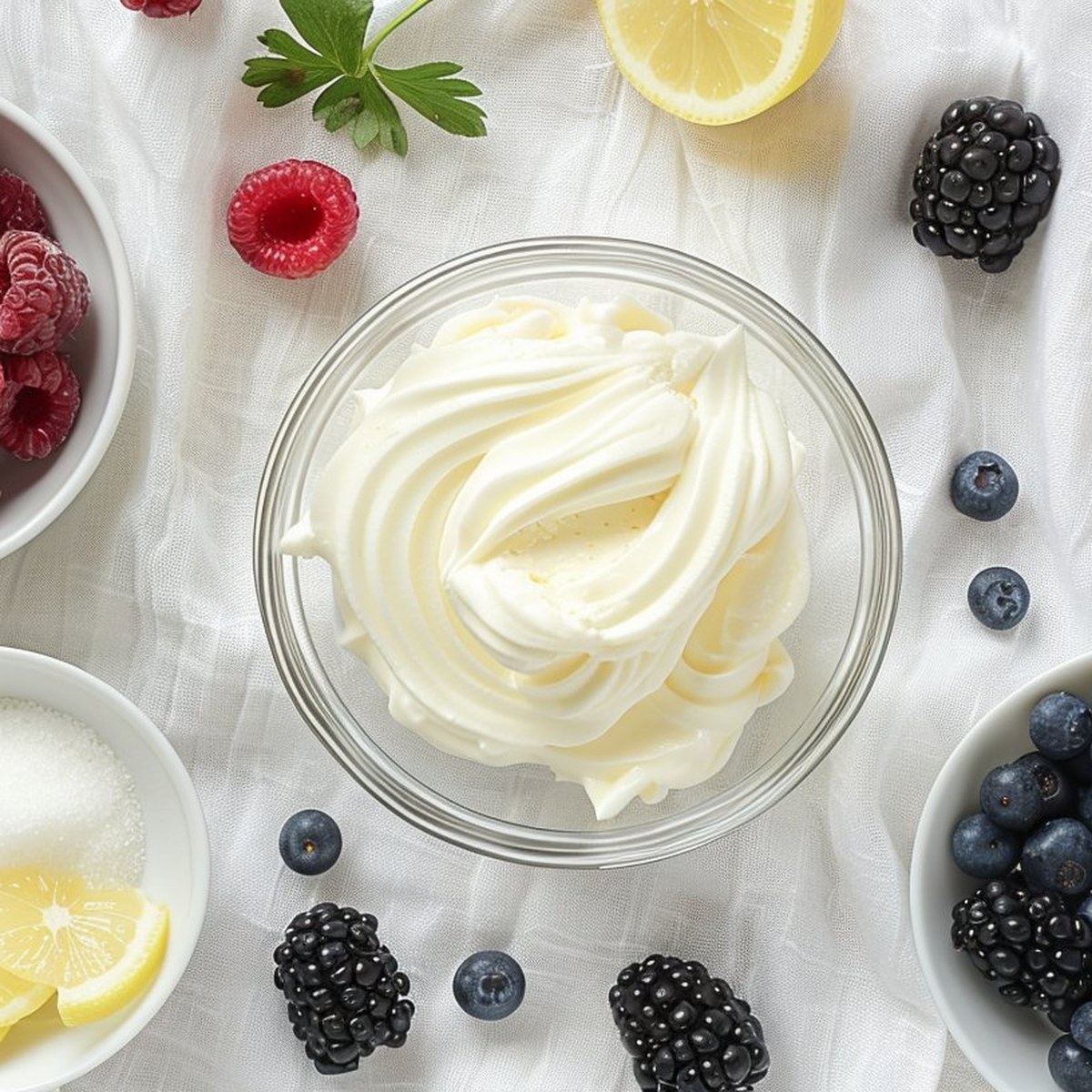
Creamy like cheesecake with intense color from berry coulis
A creamy gelato tasting of cheesecake with the red color of mixed berries. The cheesecake structure comes from mascarpone + cream cheese combination: the first gives creaminess and fat (44%), the second the typical New York Cheesecake tang. The coulis is a fruit sauce cooked and sieved, dense and fragrant, that goes into the base giving uniform intense color. Works year-round, not just for special occasions.
Room temperature cream cheese: don't skip this. Cold cream cheese doesn't emulsify with mascarpone and makes lumps.
About berries: frozen mix (raspberries, strawberries, blueberries, blackberries) costs less than fresh and yields the same. Cook over medium heat, not high, or color turns brown.
Yolk: needed to emulsify mascarpone fats with liquids. Without it the base separates in freezer.
While New York Cheesecake (see separate recipe) is the daughter of Manhattan Jews and uses Philadelphia cream cheese, there's another older and different European continental cheesecake tradition. The oldest ancestor is the Roman "libum" — a fresh cheese and honey dessert described by Cato the Elder in "De Agri Cultura" (160 BC). Yes, the Romans made cheesecake.
From there the tradition branched out. In Austria and Germany "Käsekuchen" was born with Topfen/Quark — a fresh cheese similar to ricotta but drier. In Italy we have the Sicilian "crostata di ricotta" and the Roman "torta di ricotta". In Poland "sernik". In France "gâteau au fromage blanc". Each with its local cheese.
The addition of red berries (raspberries, blueberries, currants, blackberries) is a Northern European trait — because berries grow abundantly in German, Austrian and Polish forests. The cheesecake + red berries combination is documented in Austro-Hungarian recipe books from the 1700s.
In our gelato version we combine the traditions: cream cheese (an accessible compromise between Roman ricotta and Austrian Quark) + Italian mascarpone (for creaminess) + mixed red berry coulis (the Northern European note). The result is a "continental" cheesecake gelato, less sweet than the American NY, more fruity, more complex. It's the cheesecake version you'd find in a Vienna café or a Prague pastry shop.
The two technical differences between this cheesecake gelato and the NY are the cream cheese / mascarpone ratio and the red berry variegate.
Cream cheese has pH 4.4 and 33% fat. Mascarpone has pH 6.0 (almost neutral) and 44% fat. Mixing them at 1:1.5 ratio (more mascarpone) means: final pH around 5.0 (less acidic than NY, sweeter on the palate), total fat around 40% (creamy but not heavy). It's the typical balance of Northern European cheesecakes.
The red berry coulis is the secret of color and flavor. Red berries (raspberries, blueberries, currants, blackberries) contain anthocyanins — natural red-blue-purple pigments that color berries. Anthocyanins are pH-sensitive: at pH < 4 they're vibrant red, at pH 5-6 they turn purple-blue, at neutral/basic pH green-brown.
The pH of our coulis (around 3.5, thanks to lemon juice) keeps the anthocyanins in vivid-red zone. The pH of the gelato base is 5.0. The color contrast — vivid red veining in creamy ivory gelato — is exactly the typical one of red berry cheesecake.
Technically: filtering the seeds of the coulis is essential. Raspberry and currant seeds freeze into hard crystals, ruin the texture. Filtering through fine sieve takes 2 extra minutes but makes the difference between professional and homemade gelato. For Tefal/Moulinex Dolci and Ninja Creami Deluxe the coulis must be added as MIX-IN after the first processing, never before freezing — otherwise you lose the variegate and get a uniform pale pink gelato.
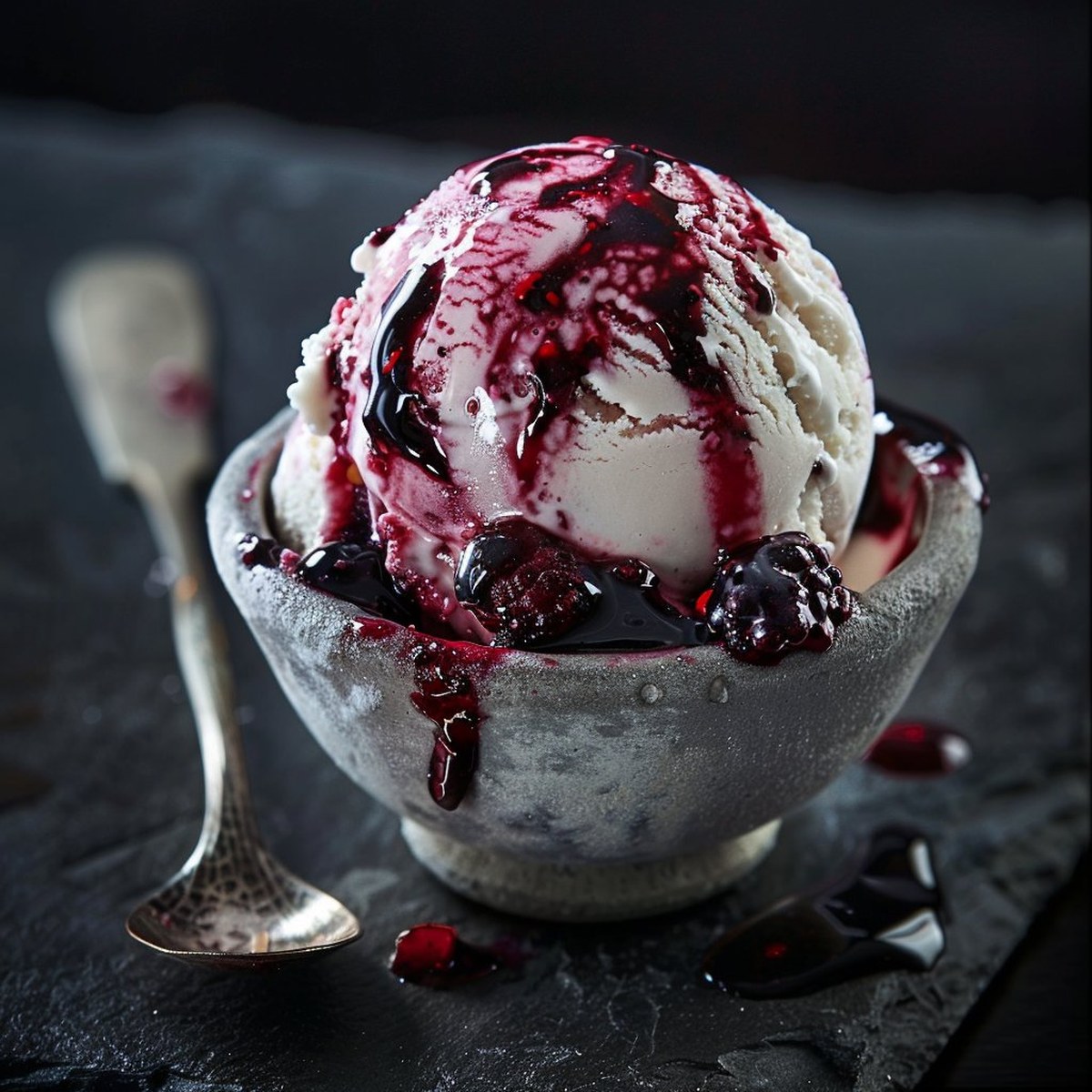
"Raspberries only": use exclusively raspberries (200g). Purer flavor, slightly more acidic. Suitable for those who love "sharp" taste.
"Passion fruit cheesecake": replace red berries with passion fruit pulp. Tropical-tangy flavor, yellow-orange color.
"Vegan version": replace cream cheese with vegan cream cheese (Tofutti, Violife) and mascarpone with Greek soy yogurt. Result: similar, slightly less creamy, but totally plant-based.
"Light/Lactose-free": use light cream cheese (15% fat vs 33%) + whole Greek yogurt (instead of mascarpone). Lower macros, identical taste. Suitable for those in calorie deficit.
Serve at -10°C in crystal cup. Decorate with mixed fresh red berries (3-4 raspberries, 5-6 blueberries, 1-2 sliced strawberries). A mint leaf as finishing.
Pairings: • Brut Champagne or extra dry Prosecco — wine acidity balances sweetness • Long American coffee (no espresso, too bitter for balance) • Lemon shortbread cantucci
For romantic dessert: present in cup with heart-shape fresh berries on white plate. Perfect aesthetic for special dinners.
"Red berry coulis turns brown/opaque purple": you cooked too long or at too high temperature. Anthocyanins are heat-labile above 90°C. Cook at 80-85°C max for 5-7 minutes, no more.
"Coulis separates from ice cream after spin": didn't cook enough to activate pectin. Minimum 5 min cooking for red berries. Pectin below doesn't gel.
"Metallic" taste: you used an aluminum or reactive container to cook coulis. Red berries are acidic and react with metal. Use stainless steel or glass pan.
Red berry cheesecake lasts 8-10 days at -18°C. Anthocyanins, however, tend to oxidize after 7 days — color shifts to opaque purple instead of vivid red. For eye (and experience), consume within first week.
Strategy: prepare base + coulis together. Store up to 7 days. For special occasions, prepare day before for maximum color vivacity.
Other recipes in the same category you might like
Intense burgundy color, wine and forest flavor — a Tuscan osteria dessert
Fresh and light with cinnamon infusion and warm spice mix
Ready in 5 minutes. The secret? Instant chocolate pudding powder.
Join our Facebook group: the first international multilingual community dedicated to Tefal Dolci, Moulinex Dolci and Ninja Creami Deluxe. Every day, enthusiasts from Italy, France, Germany, Spain, Czech Republic, UK, USA and Australia post new recipes, solve technical problems, share their results. Technical livestreams with Stefano. Join now: the community is growing fast, become one of the pioneers.
Join the Group →