The restaurant sorbet you don't expect
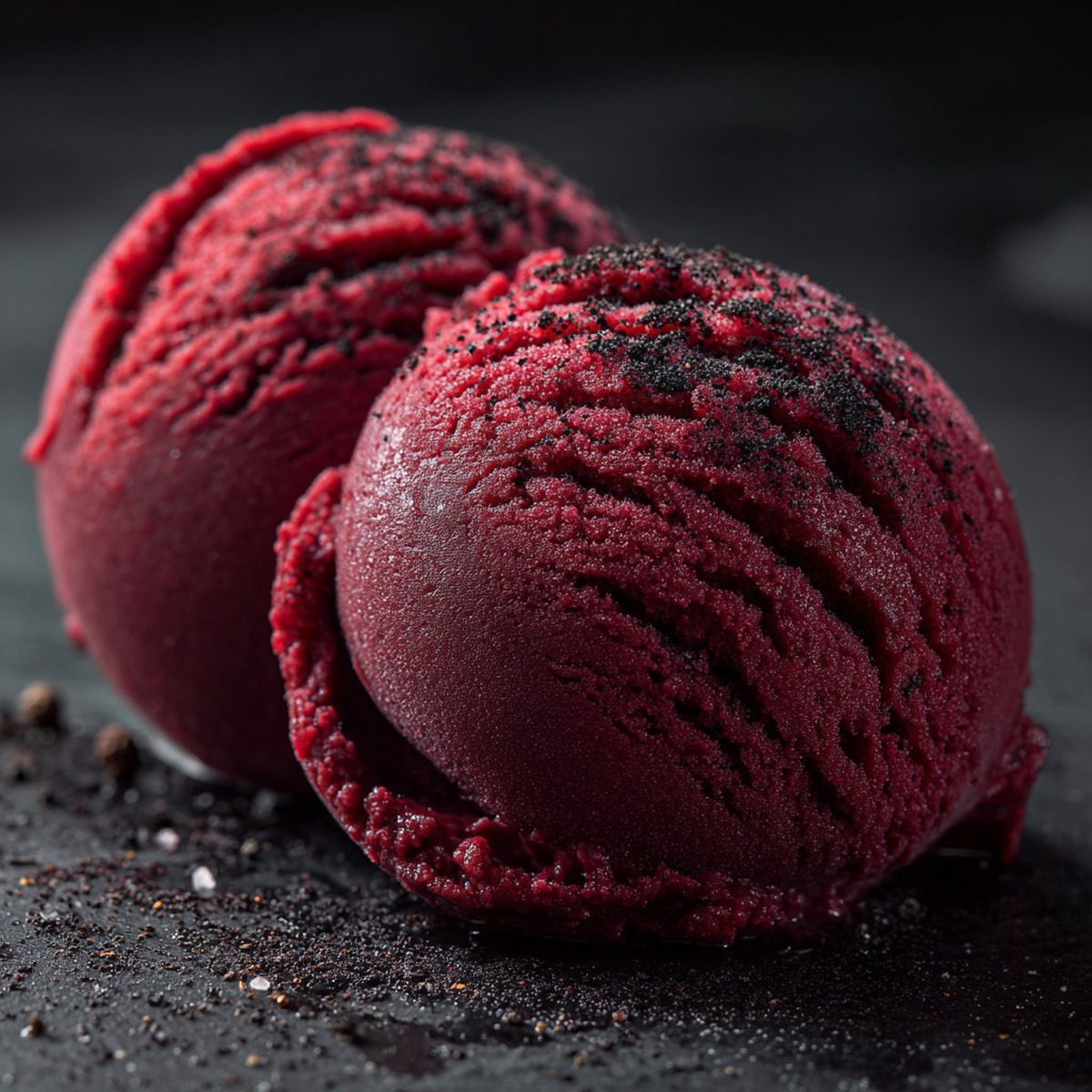
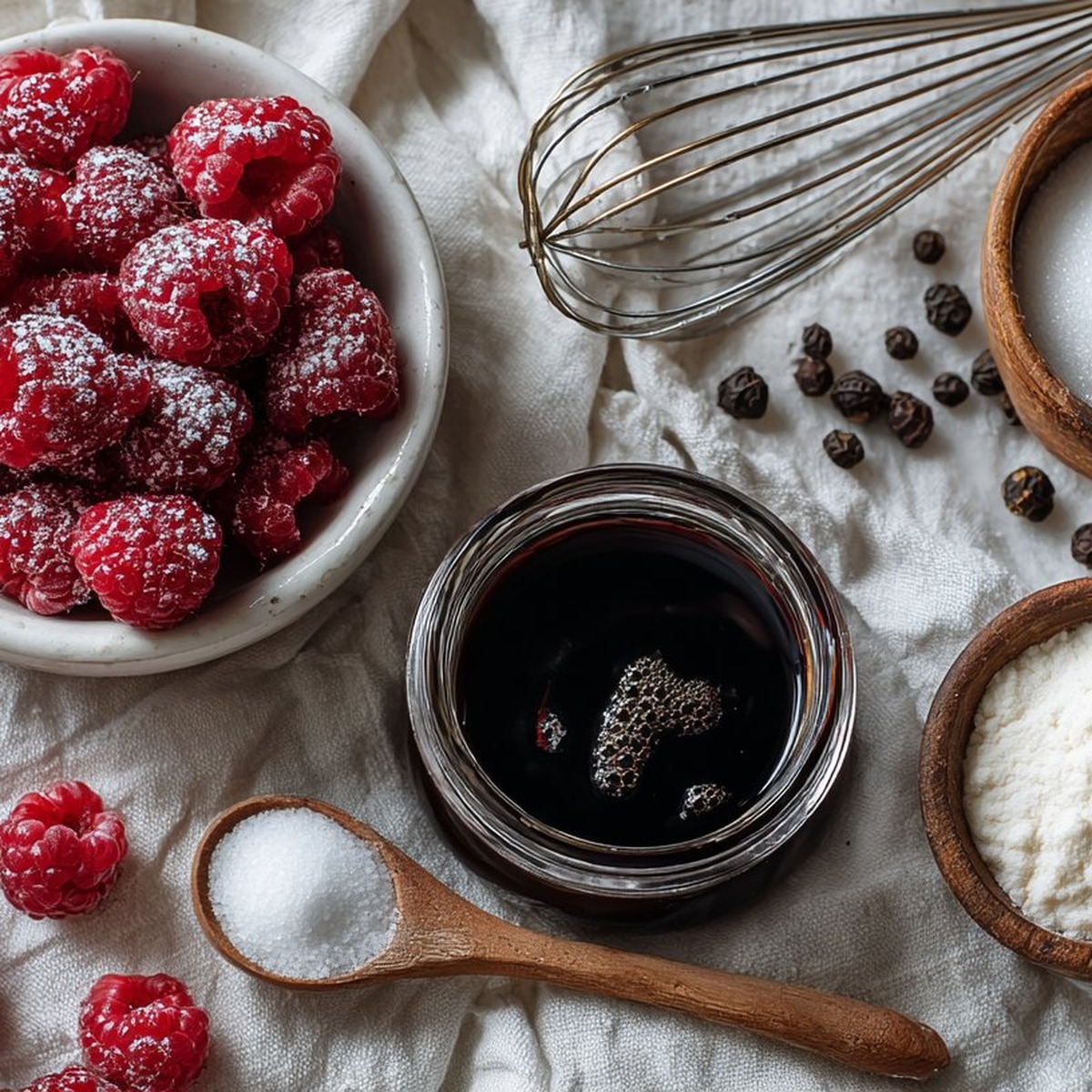
Raspberry and balsamic vinegar is one of the most famous pairings in Emilian cuisine. You find it in restaurants of Modena and Reggio Emilia as a pre-dessert or end-of-meal palate cleanser: the acidity of the raspberry, the sweetness of the vinegar, the warmth of the black pepper. Three supermarket ingredients that together create something much bigger than the parts. Zero dairy, zero fat. Pure sorbet. Intense raspberry red color with dark hints from the balsamic.
Straining is essential: without it, raspberry seeds disturb the clean texture on which pepper and vinegar rest. Balsamic glaze (the thick supermarket reduction) works better than liquid vinegar — it's already concentrated and sweet-sour. Pepper must be ground fresh: pre-ground is flat, lacking essential oils. If you only have xanthan use 2 g total. Only guar use 2 g total. Double is better but single works.
The raspberry-balsamic pairing was born in the restaurants of Emilia between Modena and Reggio Emilia in the 1980s, when traditional DOP balsamic vinegar began to be used in sweet applications — not just as a dressing for salads and meats. Massimo Bottura and other starred Emilian chefs brought it to pre-dessert: a few drops of balsamic over a strawberry, peach, or raspberry.
The idea works because the concentrated sweetness and acidity of traditional balsamic (aged 12-25 years) creates an aromatic bridge with acidic red fruits like raspberry. Fruit alone is acidic; balsamic alone is too intense; together they are rounded, sweet-sour, complex.
Black pepper entered the combination in the 2000s thanks to Northern European cuisine (René Redzepi at Noma) which used black pepper on strawberries and red fruits to give "background warmth". The idea reached Italy through the fine dining movement and is now a contemporary classic of the Emilian end-of-meal.
Pure sorbet (water + fruit + sugar) is the most difficult category at home: without dairy fat, the creamy structure must come entirely from a balance of sugars and stabilizers. Without correct technique, you get granita.
Dextrose (PAC 190): lowers the freezing point more than sucrose. The block remains workable by the blade even at -18°C, without splitting or staying stone-hard.
Chicory inulin: soluble fiber that gives body and "chewability" without adding more sugar. Without inulin, in a pure sorbet, you get grainy and watery results.
Double stabilizer guar + xanthan: guar binds free water in the long term, xanthan gives immediate viscosity. Together they trap ice crystals preventing sandy texture. In pure sorbet, this pair is what makes the difference between restaurant-level and homemade granita.
The raspberry-balsamic-pepper sorbet is a classic pre-dessert: a small scoop (30-40 g) served before the real dessert. Cleans the palate from main course flavors and prepares for dessert. Also great as a light end-of-meal after important dinners.
Wine pairings: dry Lambrusco di Sorbara or Brut Rosé (fresh bubbles balance raspberry acidity). For something more ambitious: Recioto della Valpolicella or Brachetto d'Acqui (sweet but not cloying).
Starred presentation: scoop in a black or dark glass cup to highlight the intense red. A drop of DOP balsamic for decoration, 1 fresh raspberry, 2-3 whole black peppercorns. No mint — it would be the classic mistake: mint covers the pepper.
When to serve: after red meat (game, braised), aged cheeses (36-month Parmesan, pit-aged Pecorino), or as pre-dessert in a 5+ course tasting menu.
If you want to bring this sorbet to restaurant level, two substitutions change everything:
Aceto Balsamico Tradizionale di Modena DOP instead of supermarket glaze. 10 g (Dolci) or 15 g (Deluxe) from the small bulbous bottle, aged minimum 12 years. It's a completely different product: thick as honey, sweet-sour, notes of plum and aged wood. Costs more (€60-150 per bottle) but 10 g per sorbet is nothing. Aromatic complexity is on another planet. Look for the "Consorzio Tutela Aceto Balsamico Tradizionale di Modena" brand.
Tellicherry black pepper instead of generic pepper. From the Malabar coast in India, it's the most aromatic and least pungent: floral notes, damp wood, slightly citrus. You'll find it in spice shops or online (Penzeys, The Spice House). Ground fresh like regular pepper.
With these two upgrades, the sorbet becomes a tasting-menu pre-dessert. Extra cost: €1-2 per recipe. Worth every cent.
"Tastes too much like vinegar": you used liquid balsamic vinegar instead of glaze. Glaze is sweeter and thicker. If you only have liquid vinegar, reduce it first on the stove to half volume with 1 teaspoon of sugar until it becomes a thick syrup.
"Pepper can't be tasted": you used pre-ground pepper from a packet. Change brand and grind fresh with a pepper grinder. The difference is ENORMOUS — essential oils in pepper vanish within hours of grinding.
"Comes out grainy/seedy": probably didn't strain the base well and raspberry seeds are perceptible. Strain longer, press well with the spatula. Or a stabilizer is missing (guar OR xanthan).
"Color not intense enough": raspberries not ripe enough or light variety. Add 1-2 g of blackcurrant concentrate or 2-3 extra raspberries crushed separately and mixed in before processing.
The sorbet keeps 7-10 days at -18°C with lid. After that, the volatile aromas of black pepper start to fade. Balsamic and raspberry hold longer.
Strawberry-balsamic-pepper variation: substitute raspberries with ripe strawberries (same doses). Sweeter, less acidic, less "restaurant" but more suitable for those who don't like marked acidity.
No-pepper variation: for children or those who don't appreciate it, omit the pepper. Still an excellent raspberry-balsamic sorbet. Add 5 g extra glaze to compensate for the lost complexity.
Basil variation: add 2 fresh basil leaves to the blender. Mediterranean, summery, replaces pepper "warmth" with basil freshness. Beautiful for summer end-of-meal.
Other recipes in the same category you might like
Join our Facebook group: the first international multilingual community dedicated to Tefal Dolci, Moulinex Dolci and Ninja Creami Deluxe. Every day enthusiasts from Italy, France, Germany, Spain, Czech Republic, UK, USA and Australia post new recipes, solve technical problems, share results. Technical lives with Stefano. Join now.
Join the Group →