← All recipes
Gelato
N° 40
Salted Caramel Dulce de Leche
Servings
4
Active time
10 min
Total time
24h
Machine
Tefal / Moulinex Dolci · Ninja Creami Deluxe
There's an Argentine gastronomic legend that tells how dulce de leche was born. Year 1829, Cañuelas farm, Buenos Aires. Caudillo Juan Manuel de Rosas and General Juan Lavalle are meeting to sign a peace treaty. The household maid was cooking milk with sugar for coffee, but forgot it on the fire. When she returned to the kitchen, she found the milk completely transformed — brown-caramel color, sweet and buttery flavor. Dulce de leche was born.
Beautiful story but probably romanticized. The truth is that "milk cooked with sugar" existed long before throughout South America and Europe. Each country has its name: dulce de leche in Argentina and Uruguay, manjar in Chile, arequipe in Colombia and Venezuela, doce de leite in Brazil, cajeta in Mexico (with goat milk instead of cow).
What's certain is that Argentina brought dulce de leche to the highest cultural level. It's in all Argentine children's snacks, it's in alfajores (the typical filled cookies), in helados, in restaurant desserts, in pastry shops. Sold in supermarket jars — La Serenísima, San Ignacio, Sancor — and it's the country's signature flavor.
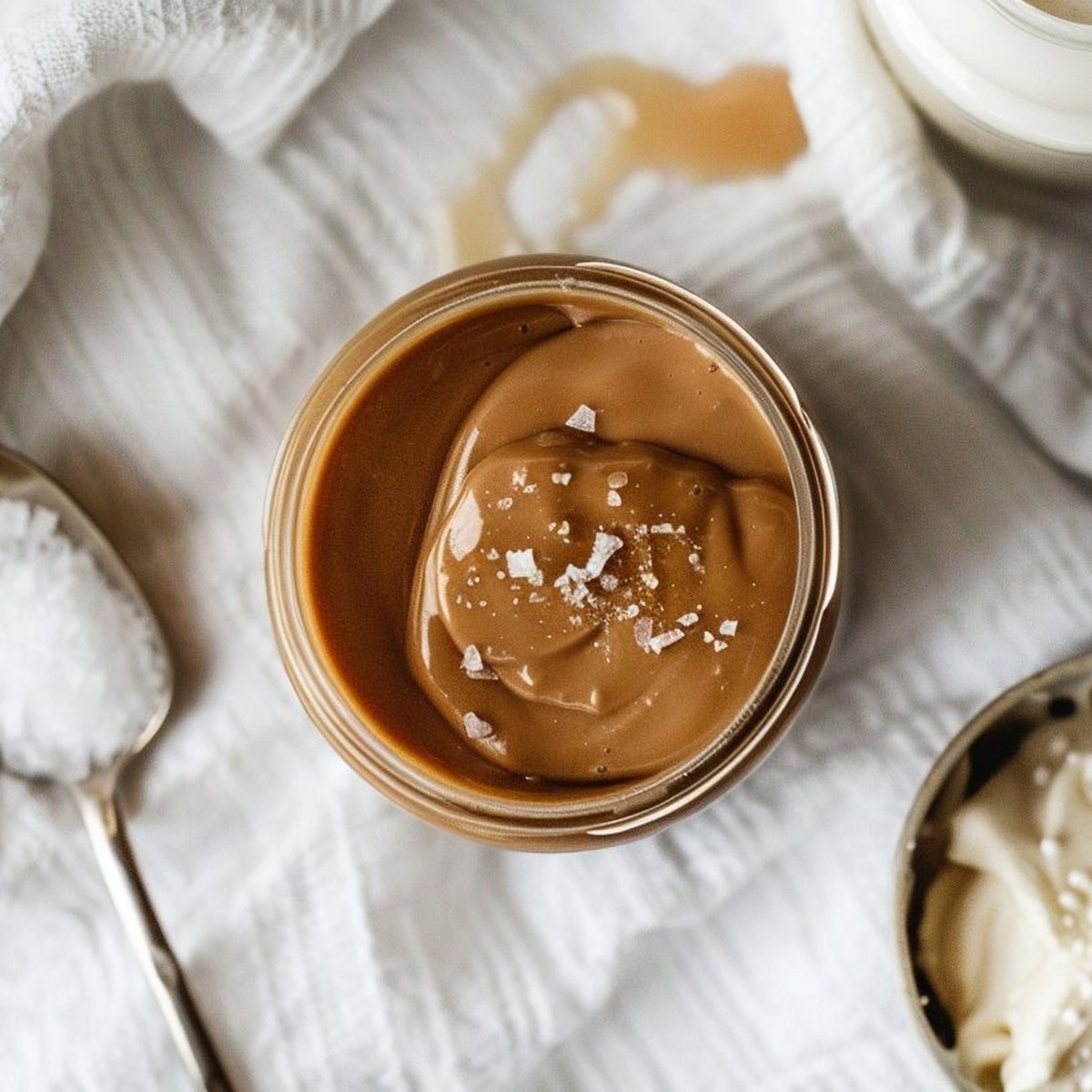
Our gelato version uses ready-made dulce de leche (found in Italy in ethnic stores, on Amazon, and now also in supermarkets in some chains). The result tastes exactly like caramelle mou — those soft caramels by Vergani, Sperlari, Caremoli. For those with children or grandchildren, it's the gelato that wins them all over. For adults, it's a journey to Argentina via dessert.
The characteristic flavor of dulce de leche — that mix of caramel, cooked milk, melted butter — is not simple caramelized sugar. It's the product of the Maillard reaction, one of the most important chemical reactions in world cooking.
The discovery bears the name of Louis Camille Maillard, French chemist who in 1912 systematically studied how sugars and amino acids (proteins) react together when heated. Above 110°C, sugars (milk lactose) and amino acids (caseins and whey proteins) start a series of complex reactions that produce hundreds of new aromatic compounds: diacetyl (buttery flavor), furanones (caramel flavor), melanoidins (brown color). It's the same reaction that occurs when meat browns, when bread toasts, when onions caramelize.
To make dulce de leche: whole milk + sugar, low heat, 2-3 hours of cooking stirring often. The temperature rises gradually, water evaporates, sugars concentrate, the Maillard reaction starts. Final result: a thick "cooked milk" at 50% sugars, 11% fats, dark caramel color. A real mine of concentrated flavor.
For gelato dulce de leche is an almost complete ingredient. It adds sugars (PAC ~95, antifreeze), milk fats (for creaminess), concentrated MSNF (for structure), and of course the flavor. A single jar (about 450g) has everything you need. We add only fresh cream + whole milk + a touch of mascarpone (for the Italian note) + a pinch of salt (to enhance caramel) and we have a perfect base.
The pinch of salt is fundamental. Salt at low concentrations (0.5g in 480g of base, 0.1%) is not perceived as salty — it enhances sweet and buttery flavors. It's what the French call "caramel au beurre salé", and what pastry chefs all over the world know as one of the best-kept secrets. For Tefal/Moulinex Dolci and Ninja Creami Deluxe this recipe is one of the most popular in the catalog: 5 minutes of preparation, flavor identical to the best Argentine ice cream parlors.
"Homemade dulce de leche": prepare dulce de leche from scratch (whole milk + sugar, cook 2.5 hours). More intense and fresh flavor, total ingredient control.
"Dulce de leche and coconut": add 30g toasted coconut flakes as MIX-IN. Coconut pairs with caramel — "Latin American" combination.
"Dulce de leche and hazelnut": add 30g pure hazelnut cream (no Nutella, too much sugar). "Ferrero Rocher" flavor in Argentinian version.
"Vegan version": dulce de leche from coconut milk (cook whole coconut milk + sugar for 1.5 hours). Same flavor, totally plant-based.
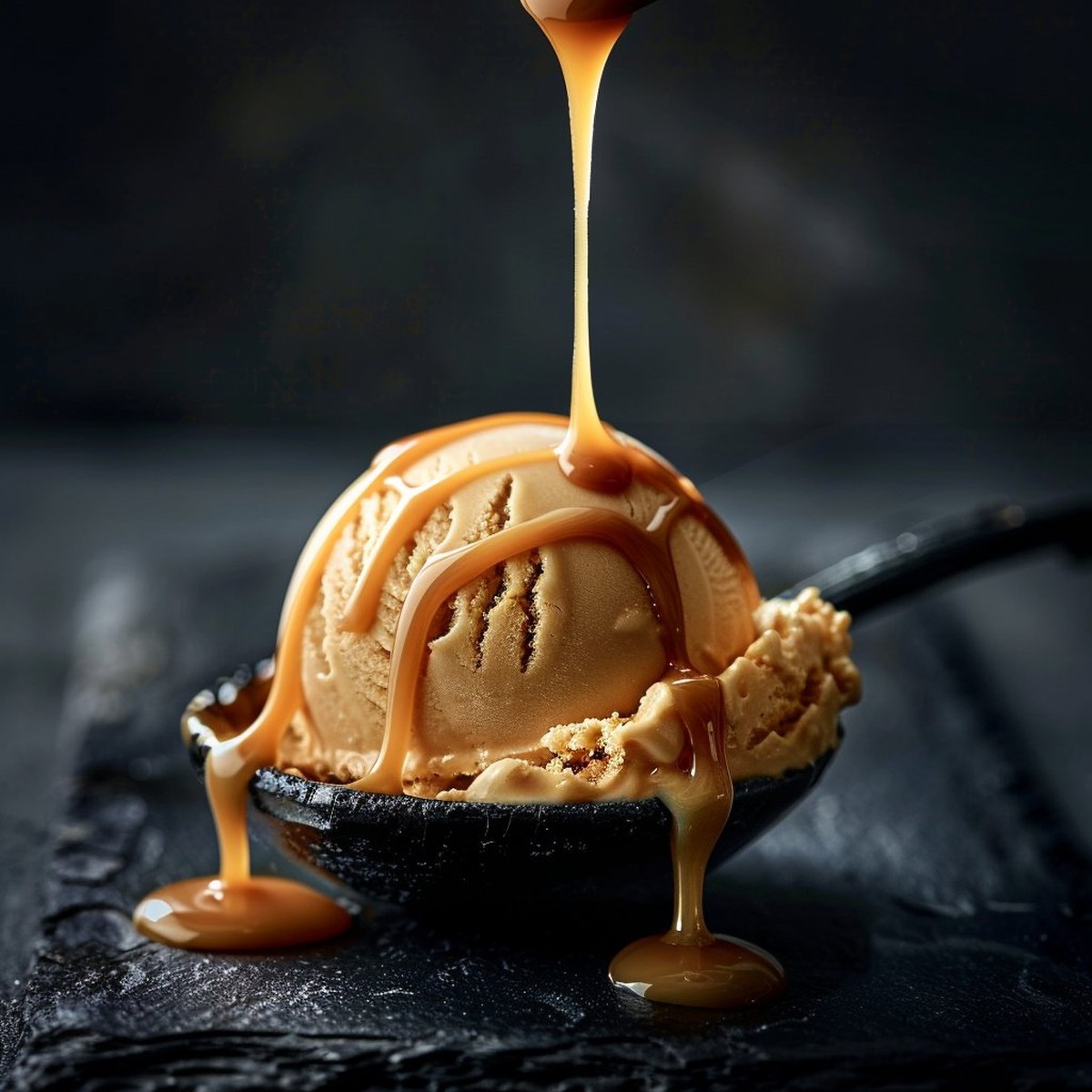
Temperature: -10°C. Decorate with a teaspoon of warm dulce de leche poured on top at moment (effect "warm sauce on cold ice cream"). A pinch of coarse salt to enhance caramel.
Pairings: • Argentinian mate (classic South American pairing) • Long American coffee • Sweet wine: sweet Malbec, Hungarian Tokaji
For "Argentine experience" dessert: dulce de leche ice cream + 1 Argentinian alfajor + hot mate. Complete experience.
"Bitter caramel flavor": dulce de leche was cooked too much (passed Maillard phase and entered pyrolysis). Use reliable brands: La Salamandra, Havanna, Vasconia.
"Too sweet": you used too much dulce de leche (over 60g per 480ml). Limit: 50g. To reduce sweetness without losing flavor: add 1g salt.
"Sticky" texture: high PAC + high fat = too "soft" structure. Reduce dulce de leche by 5g and add 5g skim milk powder.
Dulce de leche ice cream lasts 14-16 days at -18°C. Dulce de leche caramelization naturally stabilizes the product. Among catalog ice creams, one of the most resistant — great for 2-week meal prep.
Other recipes in the same category you might like
Join our Facebook group: the first international multilingual community dedicated to Tefal Dolci, Moulinex Dolci and Ninja Creami Deluxe. Every day, enthusiasts from Italy, France, Germany, Spain, Czech Republic, UK, USA and Australia post new recipes, solve technical problems, share their results. Technical livestreams with Stefano. Join now: the community is growing fast, become one of the pioneers.
Join the Group →